
Wireless vibration sensors and machine learning revealed hidden resonance during compressor startup, enabling data-driven reliability improvements.
Customer Profile
The customer is a major food supermarket chain that operates several large logistics centers for product processing and distribution.
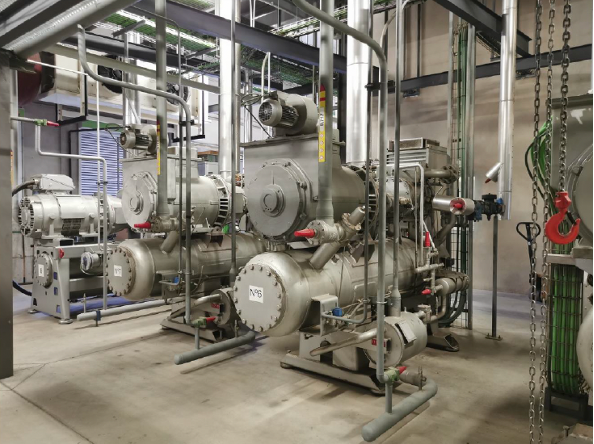
This success story takes place at one of these centers, dedicated to the storage and processing of fresh and frozen products (meat, fish, fruits, and vegetables). All facilities are fully refrigerated and include industrial refrigeration compressor rooms, which are essential to ensure product preservation and operational continuity.
The Challenge
A critical industrial refrigeration system requires greater control over the actual condition of its compressors.
The equipment was experiencing constant wear in critical components, causing emergency shutdowns. The root cause was not being detected through conventional monitoring.
The objectives were to:
- Understand the machine’s dynamic behavior
- Perform root cause analysis
- Optimize operation through advanced vibration analysis
The Solution
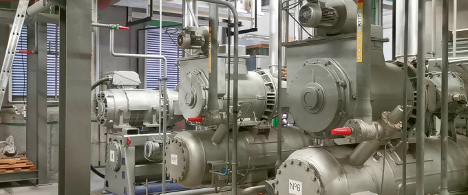
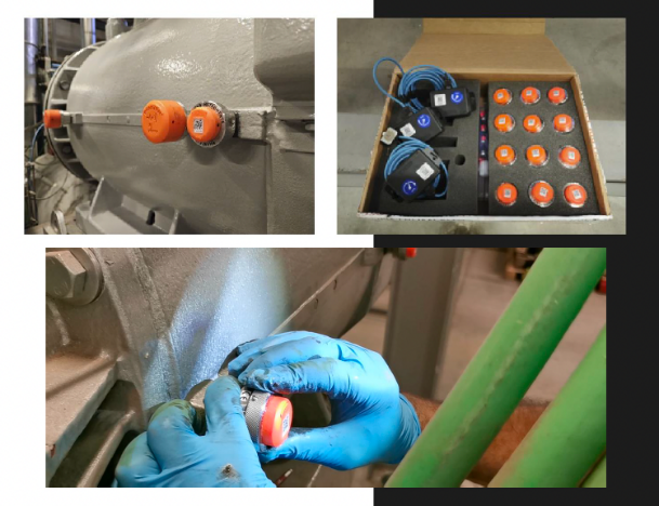
A wireless vibration monitoring system was implemented, designed to capture relevant data only when the machine is actually operating.
Sensor capabilities:
- Vibration and temperature monitoring
- Configurable speed-based alarm notifications
- Online data visualization
- Simultaneous data collection for model analysis
Implementation
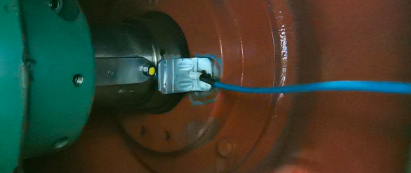
Each compressor was instrumented with four PHANTOM® sensors covering the motor, compressor, and separator.
Four vibration spectra are recored daily for each machine, providing a continuous and reliable view of dynamic behavior.
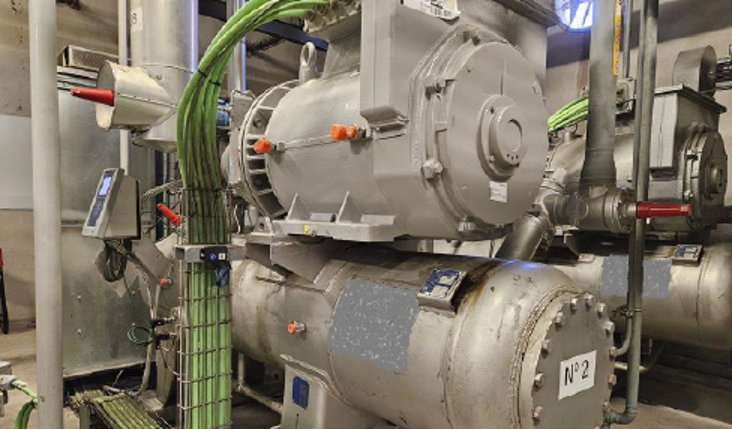
A speed (RPM) measurement systems (PHANTOM® – Erbessd Instruments) was also added to complement the vibration data, although this is optional.
Behavior Pattern Identification
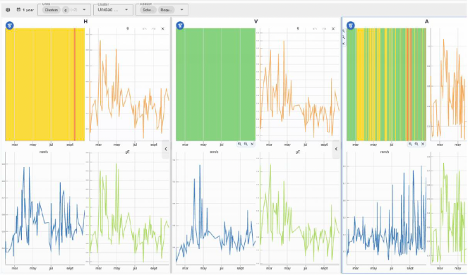
A Machine Learning system was used to detect vibration modes.
In other words, when a machine begins behaving differently from its usual pattern, the system identifies the change and classifies it as a new operating state.
Early Detection
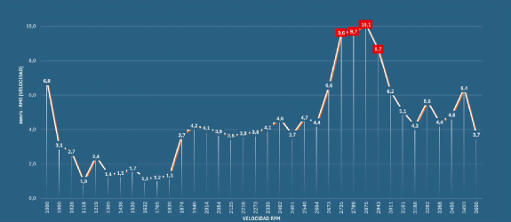
The system automatically detected a change in behavior that did not correspond to any town pattern, generating an early warning before a mechanical failure occurred.
After analyzing the new vibration pattern (mode), resonant frequencies associated with the startup ramp of each compressor were identified.
Actions Taken
- Operating speeds were defined based on solid data
- Startup ramps were adjusted to avoid resonance frequencies
- Alarm criteria were modified based on normal operating conditions
Results
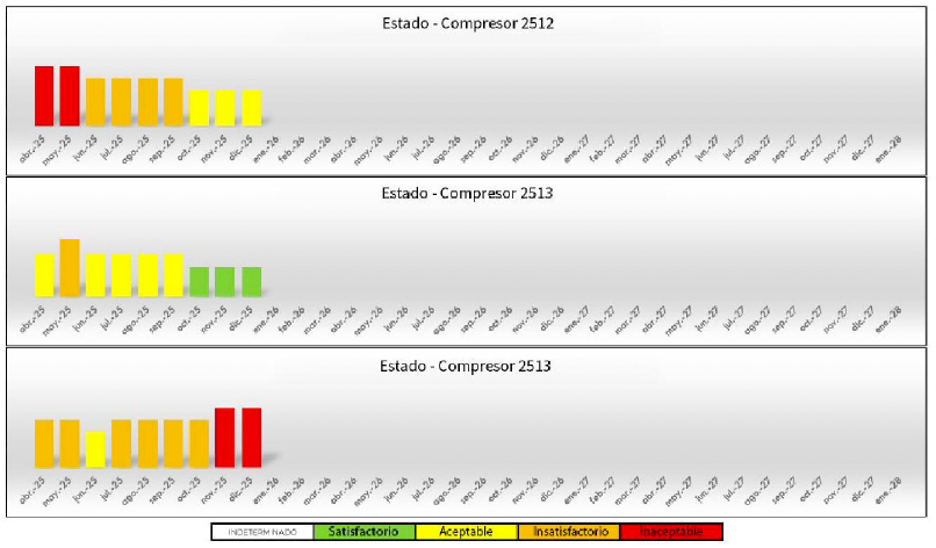
- 42% reduction in unplanned downtime in 2025 compared to 2024
- Clearly identified vibration trends
- Real-time alerts when unexpected changes occur
- Stable machine behavior under normal conditions
Industry Impact
Companies that implement predictive maintenance and condition monitoring typically achieve 30-50% reductions in unplanned downtime on average.
Conclusion
The system shifted from a reactive approach to data-driven predictive maintenance.
About the Author
Vibring is a Spain-based company and an authorized distributor of Erbessd Instruments® . Specializing in the development of innovative solutions utilizing advanced technology for diagnosing and monitoring the condition of industrial machinery, Vibring achieves this through non-invasive monitoring and analysis of mechanical and electrical variables.
The primary application of these solutions lies in the realm of predictive maintenance, involving the analysis of vibrations and electrical variables. The company boasts specialists certified to ISO standards and possesses extensive experience in machinery diagnostics, serving leading companies in sectors such as food, chemicals, mining, among others.
ERBESSD INSTRUMENTS® is a global manufacturer of Vibration Analysis Equipment, Dynamic Balancing Machines, and Condition Monitoring solutions, with facilities in Mexico, United States, UK, Colombia and India.