
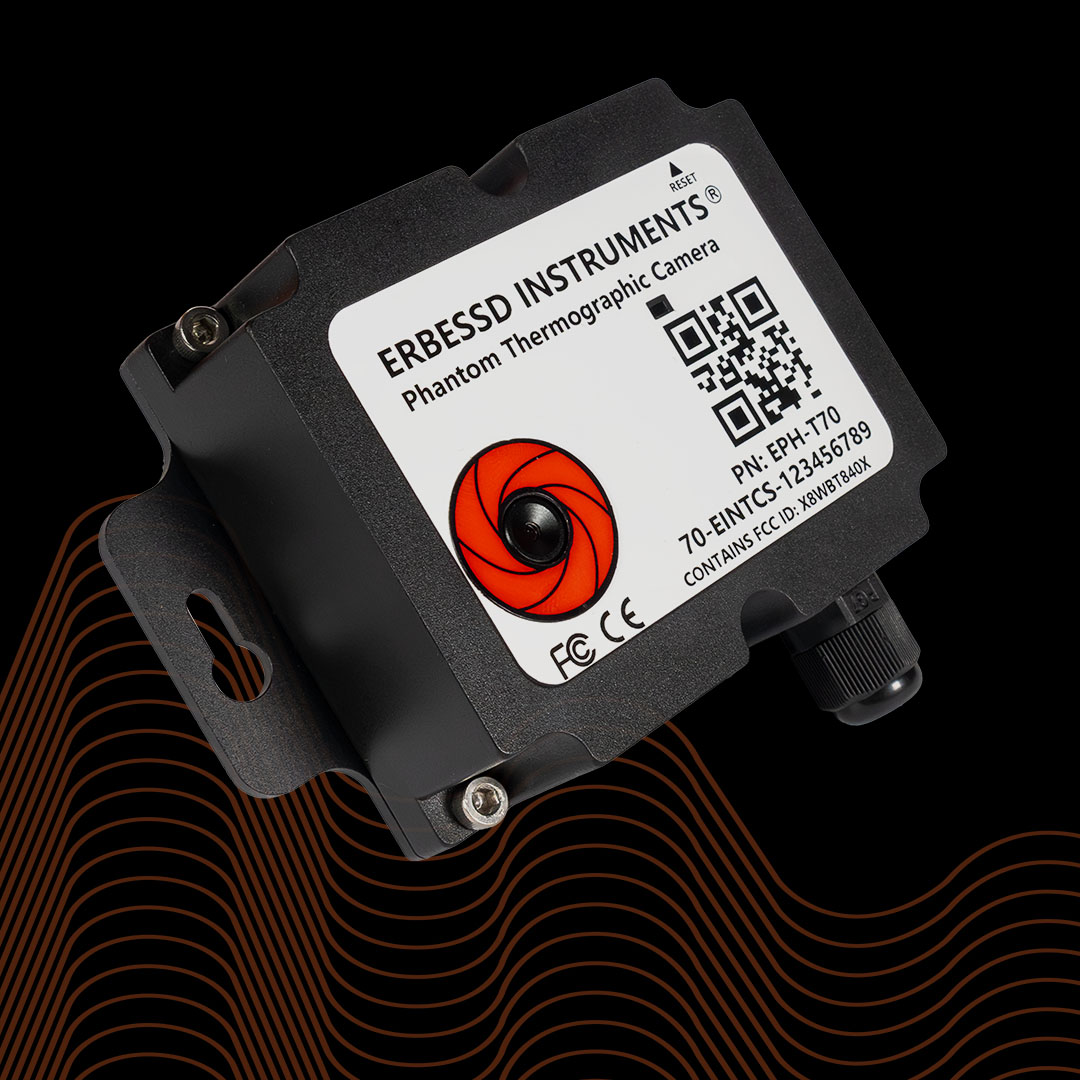
In the world of predictive maintenance and condition monitoring, we often focus on vibration, oil-analysis, alignment and similar tools. But one domain that remains under-leveraged–yet critical–is thermal imaging, especially when working around high-risk machinery, electrical panels, or industrial assets in harsh, dangerous environments. As an organization who prides itself on offering a full suite of condition monitoring solutions, thermographic imaging is not an area we have overlooked. The Phantom® Thermographic Camera offers a solution worth attention.
The Safety Context
Safety ranks among our highest priorities in the condition monitoring world, or it should. While we often focus on asset health, return on investment, production and cost efficiency, we cannot fail to consider the health of our most valuable and vulnerable assets–our people.
Working near energized equipment isn’t just a matter of managing downtime–it’s about managing life-safety risk. According to Occupational Safety and Health Administration (OSHA), an electric flash is “a type of electrical explosion” where temperatures may exceed 35,000 °F (~19,400 °C), with shock waves, molten metal and a blast radius that often injures or kills workers. (OSHA)
Hospitalization costs for arc-flash events have been reported in the hundreds of thousands of dollars (for burn injuries alone) and the liability, reputational and operational costs escalate fast. (ISHN)
You’ve likely seen the viral video of the arc flash incident at a meat packing plant in 2003 where three employees were severely burned, costing the company more than $140,000 in OSHA fines (EHS Today). Or perhaps you’ve read about the 2022 incident in Boston that killed a worker that resulted in OSHA fines in excess of $300,000 as a result of preventable violations. One such charge, “Failure to make a reasonable estimate of the heat energy to which employees would be exposed, ” may have been avoided with the installation of the Phantom® Thermographic Camera (Leaf Electrical Safety)
In short: when you’re dealing with live panels, high-voltage gear, or any system where an unexpected failure leads to a blast, thermal anomalies are no cosmetic–they can be precursors of catastrophe. Catastrophes with impact that can ripple through an entire organization: financial loss (in the form of fines, lawsuits and operational shutdown), reputation damage, and even morale, recruitment and retention efforts.
Why Thermal Imaging Matters in Condition Monitoring
Recent research underscores the growing role of infrared thermography (IRT) in condition-based maintenance (CBM). One review notes that IRT “can boost CBM analysis” and has “steadily increased during the previous three decades” for electrical and electronics energy applications. (MDPI)
In practice, a study of underground mining conveyors showed that thermal imaging allowed diagnosis of drive-unit faults (e.g., bearing friction, cooling problems) without shutting down the machine–and caught conditions that might lead to fire. (MDPI)
What these point to is a fundamental fact: non-contact temperature measurement, especially in hard-to-access or high-risk zones, gives a visibility into asset health that many maintenance programs don’t fully exploit.
Enter the Phantom® Thermographic Camera
The Phantom (model EPH‑T70) from Erbessd Instruments is a wireless thermographic module designed for continuous monitoring of assets within about 1 meter of the object. It serves as an alternative to more costly IRT cameras that require a higher level of training, investment and unique analysis. According to a review featured in MDPI, “The equipment includes a thermal camera, a tripod or camera platform, and video output devices to show the gathered infrared thermal pictures for such applications.” On the contrary, the Phantom Thermographic Camera operates as an affordable sensor in the Phantom family, fully integrating into the DigivibeMX software that users are already familiar with.
Key specs (for the tech‐savvy):
- Max object distance: ~1m.
- Field of view: ~110° × 75°.
- Temperature measurement range: –40 °C to +300 °C (–40 °F to +572 °F).
- Infared resolution: 32×24 pixels.
- Wireless communication: Bluetooth BLE 5.0, encrypted signal, battery life up to ~1-2 years.
What that gives you is a compact, wireless IR camera model you can mount close to the asset (within ~1 meter) and monitor temperature over time, wirelessly feeding data into your condition-monitoring system (via the DigivibeMX software suite).
Where the Safety Benefit Kicks In
Because the camera is wireless, non-intrusive and designed to work within 1 meter, it allows technicians to monitor temperature deviations without necessarily opening an energized panel or entering a high-hazard zone for routine checks. In a scenario where every entry into a live panel is a risk event, replacing or reducing those entries via remote-automated thermal monitoring is a significant safety improvement.
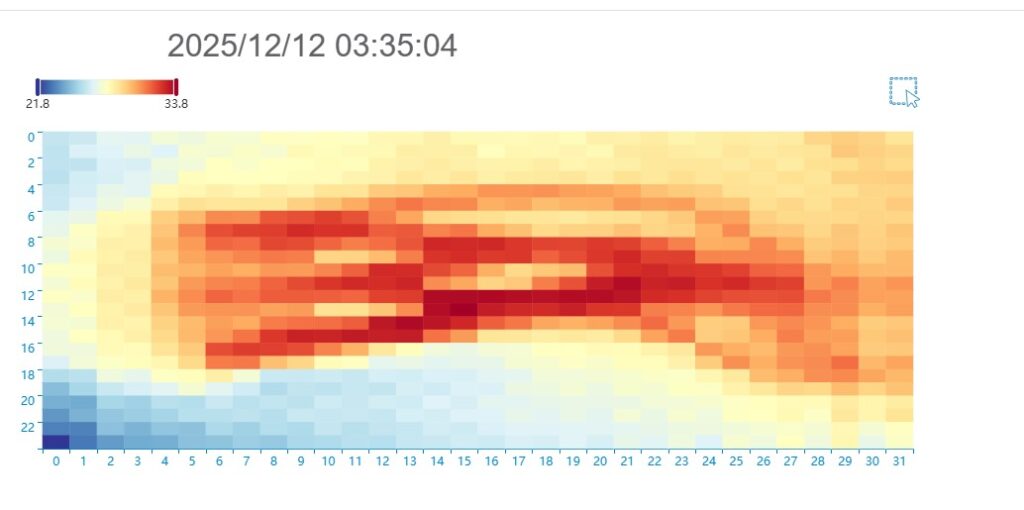
Furthermore, detecting a rising temperature trend (say, a hotspot in an electrical bus, or overheated bearings in a motor) can alert the maintenance team before the failure occurs–and more importantly, before the failure leads to fire, arc flash, or secondary damage. That’s a double benefit: protecting human life (technician safety) and protecting company finances (unplanned downtime, equipment destruction, regulatory fines)
Where the Cost Benefit Kicks In
From a financial perspective, the case for implementing a tool like this is less about “buying the latest gadget” and more about reducing risk and unplanned cost. Consider the facts:
- An arc-flash event can cost millions when you factor equipment replacement, lost production, regulatory fines, legal liability, and insurance premium increases.
- Routine thermographic monitoring can detect early faults that lead to catastrophic failures. The study above showed that thermography allowed fault detection in an active conveyor drive without shutdown. (MDPI)
- A wireless IR module that integrates with your existing condition-monitoring platform means you don’t necessarily need tens of thousands of dollars in new infrastructure–just thoughtful deployment and process change.
- And from the boots-on-the-ground tech’s perspective: less time clambering into energized zones for manual inspections; more time interpreting trends, planning interventions, and avoiding the last-minute emergency fix.
Encouraging Outdated Systems to Rethink
If you’re operating with traditional inspection routines (manual door-opening + visual check + infrared gun scan once a quarter) in a plant with energized gear consider this: each time you send a technician into a high-voltage zone, you are accepting a risk. A remote-mounted, continuously-monitoring thermal camera dimities that risk and elevates your asset-health strategy from reactive to predictive.
In that 2021 underground mining study mentioned above, researchers discovered some of the shortcomings of common IRT cameras:
The main problem during the research was to obtain a suitable measuring distance. Conveyor drive components such as the motor, gearbox and braking system are built into a recess due to the dimensions of the workings. For major conveyor installations, a fixed thermal imaging device could be used and data sent to a central control room for continuous monitoring. Exceeding a threshold temperature, predetermined from field data, could trigger an alarm, for example. Maintenance personnel could then be sent to the unit to investigate the temperature anomaly and conduct preventative maintenance if needed. (MDPI).
In other words: this isn’t just about adding another sensor or taking a picture, it’s about rethinking how you monitor critical assets–especially those where human entry has inherent hazards. If your condition-monitoring program still treats thermal checks as a manual, periodic after-thought, it may be time to ask: “How much risk are we carrying that we don’t need to?”
Implementation Considerations
- Placement matters: Since the Phantom® is limited to ~1 meter target distance, it’s optimal for accessible assets or panels where you can mount the sensor within the filed of view.
- Integration with CM software: Ensure the IR module ties into your existing CM platform so trends are captured, alarms are actionable, and data becomes part of your overall analytics.
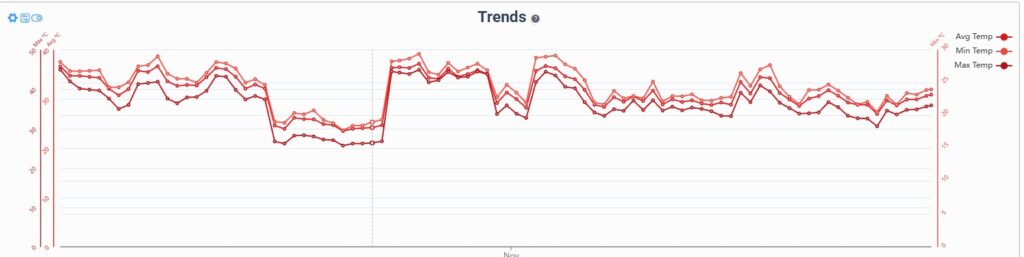
- Alarm thresholds and trend-tracking: Temperature spikes are often more telling than single high readings. Set your trending and alert thresholds accordingly.
- Support process change: Introducing a wireless IR system is more than hardware–it’s a shift in inspection methodology. Engage your techs, train them on interpretations and response to thermal anomalies.
- Cost v.s risk: Quantify your risk exposure (downtime cost, safety exposure, regulatory costs) and compare to the investment in continuous thermal monitoring–often the math favors prevention.
Conclusion
For condition‑monitoring teams, especially those working in industrial plants with high‑hazard zones (electrical, mechanical, etc.), the Phantom Thermographic Camera offers another powerful tool in the safety & cost‑reduction toolkit. It provides non‑contact, continuous thermal monitoring, which helps reduce technician risk, detect faults early, and integrate into a modern CBM program.
The goal isn’t to push the latest gadget—it’s to encourage a shift in mindset: from manual, dangerous and unreliable checks to continuous, smarter monitoring, thereby protecting the assets we invest and rely on most to protect our operations– people.
EHS Today. “OSHA Investigation Leads to $148,500 in Penalties for Patrick Cudahy Inc.” EHS Today. https://www.ehstoday.com/archive/article/21911172/osha-investigations-leads-to-148500-in-penaltie s-for-patrick-cudahy-inc..
Industrial Safety & Hygiene News. “Arc Flashes Cause 7K Injuries Per Year; $200K to $750K Hospital Costs.” ISHN, https://www.ishn.com/articles/101725-arc-flashes-cause-7k-injuries-per-year-200k-to-750k-hospitalcosts.
Leaf Electrical Safety. “Arc Flash Liability: 4 Important Court Cases to Know.” Leaf Electrical Safety Blog. https://leafelectricalsafety.com/blog/arc-flash-liability-court-cases
OSHA. “Electrical Safety: Arc Flash Hazards.” Occupational Safety and Health Administration, U.S. Department of Labor. https://www.osha.gov/electrical/flash-hazards.
Ojeda, J. C. O., de Moraes, J. G. B., Filho, C. V. d. S., Pereira, M. d. S., Pereira, J. V. d. Q., Dias, I. C. P., da Silva, E. C. M., Peixoto, M. G. M., & Gonçalves, M. C. “Infrared Thermography for Condition Monitoring-A Review.” Energies, vol. 15, no. 16, 2022, p. 6000. https://www.mdpi.com/1996-1073/15/16/6000.
Ojeda, J. C. O., de Moraes, J. G. B., Filho, C. V. d. S., Pereira, M. d. S., Pereira, J. V. d. Q., Dias, I. C. P., da Silva, E. C. M., Peixoto, M. G. M., & Gonçalves, M. C. “Condition Monitoring of Belt Conveyor Drive Units in Underground Mining Using Thermography.” Energies, vol. 14, no. 11, 2021, p. 3258. https://www.mdpi.com/1996-1073/14/11/3258.
About the Author
Megh Howard, BSc serves as the Chief Marketing Officer and Director of People & Culture at Erbessd Instruments. This unique combination allows her to unite the company’s outward-facing brand strategy with its internal culture and values—ensuring that how the company shows up for its customers is deeply rooted in how it operates from within.
Megh believes that a strong, people-centered culture is essential to delivering exceptional customer experiences. By fostering an environment where employees feel valued, connected, and empowered, she helps ensure that customer-first values aren’t just part of the marketing message—they’re lived every day across the organization. Her work aligns employee engagement with service excellence, bridging global teams and creating a workplace that mirrors the trust and support Erbessd Instruments extends to its clients and partners.
A graduate of Hudson Valley Community College and Penn State University, Megh brings a thoughtful, relationship-driven approach to leadership—connecting with colleagues, customers, distributors, and industry peers with authenticity and purpose.