
When we set out to design Phantom Max, the objective was not to create a larger or more powerful version of an existing product. At ERBESSD INSTRUMENTS, our product development always starts with a more fundamental question: What problem are our customers trying to solve, and what is preventing them from solving it today?
Phantom Max is the result of that mindset–applied rigorously across mechanical design, electronics architecture, and system-level integration. It reflects deep collaboration across disciplines, and a shared commitment to building solutions that work reliably in real industrial environments.
Mechanical Design Grounded in Field Reality
One of the earliest design criteria for Phantom Max was to simplify installation, orientation, and serviceability without compromising signal quality. Anyone who installs vibration sensors in the field understands the constraints: limited access, orientation sensitivity, and the expectation that once a sensor is mounted, it should not require frequent intervention.
In a recent conversation with Armando Torres, ERBESSD INSTRUMENT’s Chief Mechanical Engineer, we discussed how the Phantom Max case was designed to be fully removable from its base, allowing the sensor to be detached without disturbing the machine interface. This enables battery replacement, servicing, or reorientation without reinstalling the mounting hardware–saving time and reducing variability.
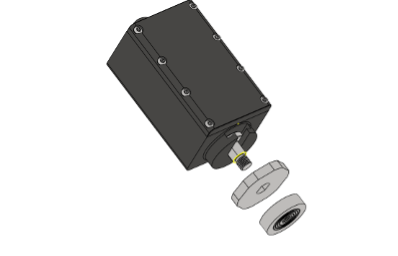
Critically, ease of use was never allowed to degrade measurement integrity. The mounting strategy preserves a rigid mechanical path between the machine and the sensor, avoiding compliant or compression-based solutions that can attenuate high-frequency vibration data. Every tolerance, interface, and fastening method was evaluated for its impact on stiffness, repeatability, and long-term durability.
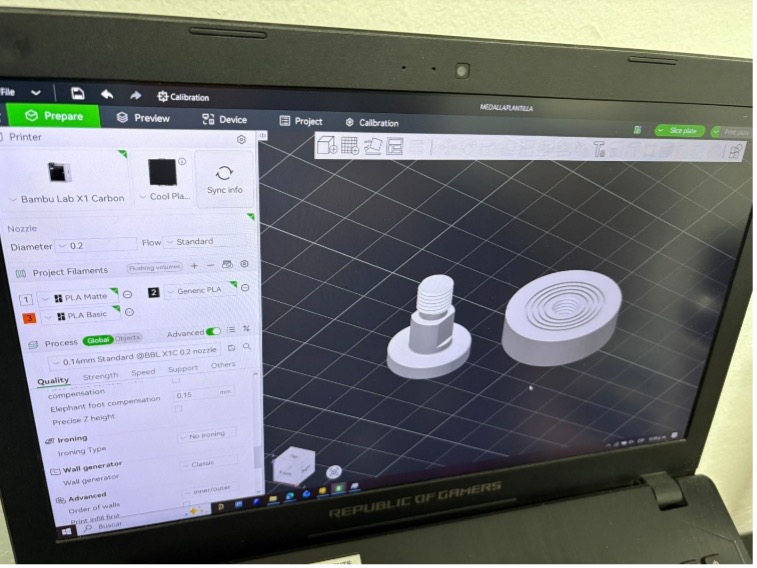
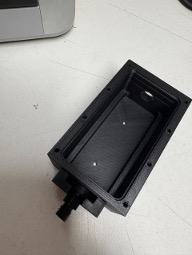
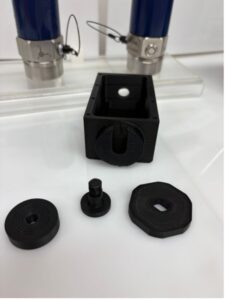
Rapid prototyping using 3D printing allowed the team to validate ideas quickly and iterate efficiently, accelerating development while reducing risk. This approach enabled faster learning and ultimately resulted in a more refined and robust design.
Electronics Designed for Signal Integrity and Endurance
The mechanical design of Phantom Max is matched by an electronics architecture led by Rubén Gómez, ERBESSD INSTRUMENT’s Chief Electronics Engineer and Software & Firmware Development led by Juan Pablo Mendoza, ERBESSD INSTRUMENT’s Director of Development. From the outset, the electronics were designed around three core principles: signal integrity, power efficiency, and reliability.
Low-noise signal paths, careful grounding strategies, and optimized component placement ensure that the vibration data represents machine behavior–not electronic artifacts. Power management was treated as a system-level challenge, resulting in ultra-low power operation, intelligent duty cycling, and efficient battery utilization.
Wireless performance was addressed holistically, with antenna placement, RF isolation, enclosure interaction, and sealing all considered together. The result is robust Bluetooth communication paired with high ingress protection–without compromise.

Customer-Focused Engineering with Technical Discipline
What distinguishes the Phantom Max development process is the consistency with which engineering decisions were evaluated through the lens of the customer. Installation repeatability, mechanical rigidity, sealing integrity, manufacturability, and long-term serviceability were all considered together. Electronic components were carefully designed, tested and integrated into a formidable product, and software and firmware development exceeds current customer requirements while establishing a strong foundation to build upon.
This level of discipline reflects the professionalism of the engineers, developers, designers, machinists, and fabricators who bring these designs to life. Their work ensures that Phantom Max performs as intended–installation after installation, environment after environment.
Solving the Right Problem: Why Phantom Max Exists

In discussions with Dr. Thierry Erbessd, ERBESSD INSTRUMENT’s President and Founder, we consistently return to the most important question in product development:
How does this product solve a customer’s problem?
Phantom Max exists because our customers asked for capabilities that could not be fully delivered within the constraints of Phantom Gen 3 and Gen 4–despite those products being exceptionally capable.
First, Phantom Max enables up to 1 km line-of-sight wireless transmission, making data collection from remote to hazardous locations easier and safer than ever before. This capability reduces personnel exposure and expands monitoring possibilities across large industrial sites.
Second, the extended battery capacity allows for longer recordings–supporting startup, coast-down, and extended time waveform measurements that require sustained sampling. These use cases were frequently requested by customers but were inherently limited by the compact form factor of Phantom Gen 3 and Gen 4.
It is important to note…that limitation was intentional. Phantom G3 and G4 were designed to be small because customers told us traditional IEPE accelerometers were often too tall or too wide for constrained installations. Those products solve that problem exceptionally well and remain critical tools in many applications.
Phantom Max was designed to complement them–not replace them–addressing a different class of measurement challenges where range, power, and recording duration are the priority.
Third, Phantom Max was architected with future hardware upgradeability in mind. The platform provides sufficient margin to support future enhancements, ensuring it remains relevant as customer needs evolve.
Like every ERBESSD INSTRUMENTS product, Phantom Max exists because customer needs were identified, validated, and prioritized. The customer is always first here at Erbessd Instruments–and that philosophy is what I value most about the work we do.
Final Thought
“The best engineering doesn’t come from individual ideas–it comes from disciplined collaboration, where experience, execution, and respect for the customer intersect.”

About the Author
Dr. M. David Howard, CRE, CMRP, CSSBB is an American entrepreneur and Air Force veteran with a remarkable career in the predictive maintenance industry spanning over 30 years, and a variety of industrial sectors, including industrial manufacturing, reliability engineering, and instrumentation development and design organizations. Dr. Howard is a graduate of Excelsior University, Capella University, and New Charter University with degrees in Electro-Mechanical Engineering, Leadership and Organizational Management, and Engineering Management.
As the CEO of Erbessd Instruments, he leads strategy, sales, marketing, and operations in English-speaking markets. He is a certified reliability engineer, certified maintenance and reliability professional, and category III vibration analyst. Michael is a passionate advocate for wireless instrumentation, video deflection, and the Industrial Internet of Things (IIoT).
ERBESSD INSTRUMENTS® is a leading manufacturer of Vibration Analysis Equipment, Dynamic Balancing Machines, and Condition Monitoring with facilities in Mexico, the USA, the United Kingdom, and India.