
Closing the Gap: How Gen 4 Wireless Vibration Sensors Now Rival IEPE Performance
For decades, industrial vibration analysis has relied on one benchmark: the performance of hardwired IEPE accelerometers. Their dominance hasn’t been accidental–it’s rooted in physics, signal integrity, and proven reliability in demanding environments. Low noise floors, wide dynamic range, and broad frequency response has made IEPE sensors to the definitive standard for condition monitoring across manufacturing.
Wireless solutions, despite their operational advantages, have historically fallen short of this benchmark.
That gap is now closed.
The Historical Tradeoff: Convenience vs. Data Quality
Wirless vibration monitoring has long promised scalability, reduced installation costs, and faster deployment. However, these benefits came with a compromise: signal fidelity
Most wireless sensors have relied on MEMS technology to achieve acceptable battery life and deployment longevity. While effective for low-power operation, MEMS-based systems introduce inherent limitations–most notably higher noise levels and constrained dynamic performance. As documented in industry research, elevated noise floors reduce signal-to-noise ratio, directly impacting the reliability of vibration-based diagnostics, particularly in applications requiring precise displacement or strain estimation.
In practical terms, this meant that wireless solutions were often relegated to screening-level monitoring–not full diagnostic analysis.
The Industry Standard: Why IEPE Still Matters
IEPE accelerometers have remained the gold standard because they deliver where it matters most:
- Exceptionally low noise floor –> enabling detection of subtle fault signatures
- Wide dynamic range –> capturing both low-amplitude and high-amplitude events without distortion
- Broad frequency response –> supporting both low-speed and high-speed machinery analysis
For analysts these characteristics are not optional–they are foundational. The accuracy of any predictive maintenance program is directly tied to the quality of the vibration data collected.
From Gen 3 to Gen 4: A Fundamental Breakthrough
ERBESSD INSTRUMENTS® has been advancing wireless sensing technology with a clear objective: eliminate the performance tradeoff.
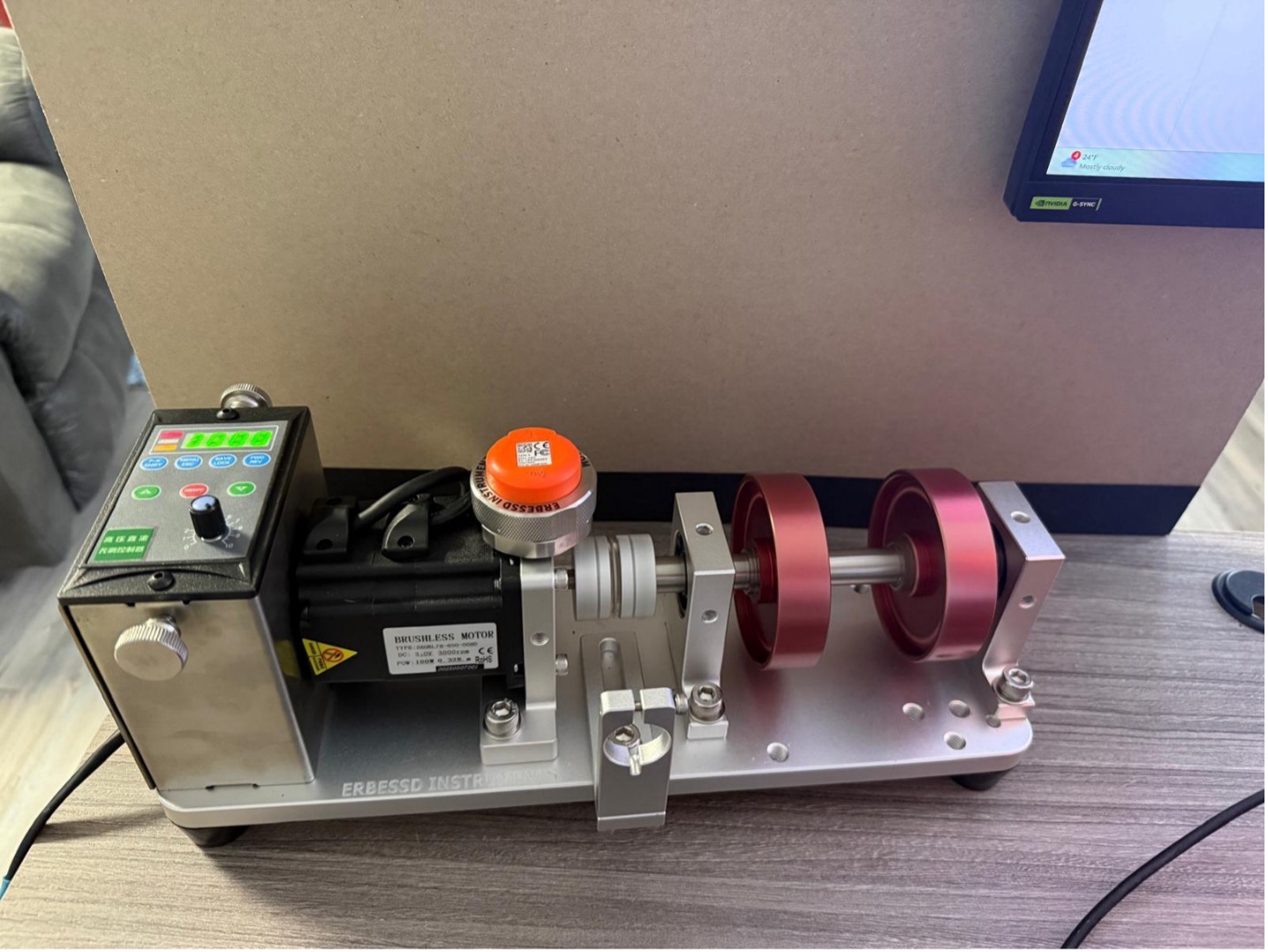
The Gen 3 PHANTOM® sensor represented a meaningful step forward, demonstrating signal characteristics approaching those of wired IEPE systems. However, it still reflected the industry-wide reality–close, but not equivalent
With the introduction of the Gen 4 PHANTOM®, that distinction disappears.
Gen 4 PHANTOM®: Wireless Without Compromise
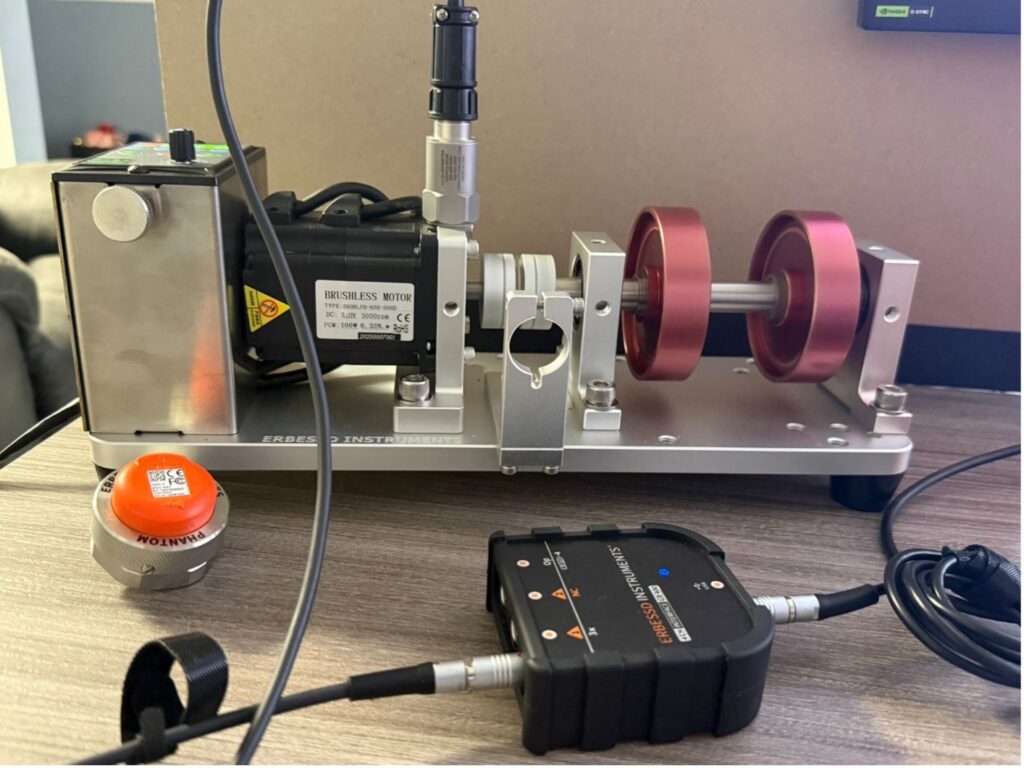
Extensive testing confirms that the Gen 4 sensor achieves true parity with IEPE accelerometers in key performance metrics, establishing it as the first wireless IIoT vibration sensor capable of competing directly with hardwired systems.
Key advancements include:
- IEPE-comparable noise floor
Matching the performance of a 100 mV/g wired accelerometer, enabling high-resolution signal clarity - Adjustable dynamic range up to ±60 g
Supporting a wide spectrum of machinery–from low-energy assets to high-impact environments - High-fidelity signal integrity
Delivering clean, reliable data suitable for advanced diagnostic analysis–not just trending
This is not an incremental improvement–it is a categorical shift.
Why This Matters for Reliability Programs
The implications are significant.
For the first time, organizations no longer need to choose between:
- Data quality (wired systems) and
- Scalability and flexibility (wireless systems)
With Gen 4, both are achievable simultaneously.
This unlocks new possibilities:
- Expanding monitoring coverage without prohibitive installation costs
- Deploying sensors in previously inaccessible of cost-restrictive locations
- Enabling truly data-driven maintenance strategies at scale
Most importantly, it ensures that analysts are working with diagnostic-grade data, not approximations.
Redefining the Wireless Category
The industry has long accepted a hierarchy where wireless solutions occupy a secondary tier behind wired IEPE systems. That hierarchy is no longer valid.
The Gen 4 PHANTOM® represents a new class of sensor–one that combines IIoT flexibility with uncompromising signal performance. It is, by design and by measured outcome, the first and only wireless vibration sensor capable of standing alongside IEPE accelerometers as a true peer.
And for the first time, wireless is no longer a compromise–it’s an upgrade.