Four vibration monitoring systems compared — Erbessd, Tractian, Dynamox and Augury — on ownership, data, coverage and five-year cost
Short answer. ERBESSD INSTRUMENTS® sells you the sensors once, lets the database live on your own server or in our cloud, covers walked routes and continuous monitoring in one platform with eleven sensor types, hands the analyst an AI verdict built on the whole machine’s context, and creates cases in MaintainX, SAP and IBM Maximo. You can start with a route collector and add PHANTOM® sensors machine by machine, in the same software. Tractian puts vibration, ultrasound, temperature and RPM in one rented sensor with 4G backhaul and its own CMMS, at an estimated $35 per sensor per month, with the data living only in its cloud. Dynamox sells hardware you keep, on a route or a gateway, but measures vibration and temperature only and prices API access per request. Augury sells the diagnosis rather than the instrument: its analysts, per machine per year, and nothing is ever yours.
All four systems in this guide sell the same destination: wireless sensors on your machines, software that turns their readings into a machine-health assessment, and a database that keeps the history. The differences that decide whether the program is still running in year three are structural, and they almost never come up in a demo: can you start small and grow, do you own the sensors or rent them, where does the history live, how many physical variables can you actually measure, and what happens to five years of data if you stop paying. Get those wrong and you do not have a monitoring program — you have a subscription you cannot cancel.
We make one of the four. So below you will find our own pros and cons written out in the same format as everyone else’s, which is more than you will get from most articles of this kind. Every claim about the other three comes from their published materials as of September 2026. Prices for the rented systems are third-party estimates, because neither Tractian nor Augury publishes a per-sensor price.
Erbessd vs Tractian vs Dynamox vs Augury, head to head
Everything that follows, in one table:
✔ publicly documented · — not found in public documentation
| ERBESSD INSTRUMENTS® | Tractian | Dynamox | Augury | |
|---|---|---|---|---|
| What you own | ||||
| You own the sensors | ✔ | — | ✔ | — |
| Battery you can replace yourself | ✔ CR2477 coin cell | — sealed; the whole sensor is swapped | — sealed case | ✔ replacement kits |
| Cost model | One-time purchase · rental via distributors | Per-sensor subscription | Purchase + platform plan | Per-machine service |
| Published entry price | From ~$350 per sensor in volume packs, once | ~$35 per sensor/month (third-party estimate) | On request | ~$50–200 per machine/month (third-party estimate) |
| Your data | ||||
| Database on your own server | ✔ SQL Server, MySQL | — | — | — |
| Full raw waveform available to you | ✔ over MQTT, as JSON | — | — | — |
| API and protocol docs public before purchase | ✔ | Customer-gated | Public, priced per request | — |
| Works with the CMMS you already run | ✔ MaintainX, SAP, Maximo + Modbus, MQTT, OPC UA, API | ✔ SAP, Maximo, NetSuite | ✔ CMMS/EAM | ✔ |
| What you can measure | ||||
| Vibration and temperature | ✔ | ✔ | ✔ | ✔ |
| Top sampling rate on the spec sheet | 32 kHz wireless · 96 kHz wired (DEFIANT™) | 32 kHz (headline says 64 kHz) | — | — |
| Ultrasound | ✔ third-party sensor via 4–20 mA | ✔ built in | — | ✔ separate sensor |
| Current or electrical | ✔ dedicated current sensor, 3 and 4 channels | ✔ energy sensor | — | ✔ magnetic field |
| RPM | ✔ dedicated sensor | ✔ magnetometer estimate | — | — |
| Wireless thermal camera | ✔ −70 to 380 °C | — | — | — |
| Temperature beyond the sensor housing | ✔ thermocouple modules, −210 to 1,800 °C | Built in, to 120 °C | Built in | Built in |
| Your existing 4–20 mA and 0–10 V sensors | ✔ 4 channels per module | — | — | — |
| Hazardous-area certification | ✔ ATEX and IECEx, gas and dust, certificates published | ✔ ATEX/IECEx compliance stated | — | — |
| Sensor height and mount | 34.5 mm, 187 g, on a stud | 71 mm, 180 g + 22–50 g base, glued or screwed | — | — |
| What the platform does | ||||
| Continuous monitoring | ✔ | ✔ | ✔ | ✔ |
| Wired continuous monitoring with phase between channels | ✔ DEFIANT™, 8 or 16 channels at 96 kHz | — | — | — |
| Hybrid: walked route and permanent sensors | ✔ EI WiSER® 3X or GX-400 on route · PHANTOM® permanent | — continuous only | ✔ same logger, on a route or on a gateway | — continuous only |
| Promote a machine to permanent without restarting its history | ✔ same software, database, ML alarms and CMMS cases | — | ✔ same platform | — |
| Dashboards built per role and tree level | ✔ | — | — | — |
| Priority score ranking every asset | ✔ risk + urgency | — | — | — |
| Diagnosis rules you can inspect and edit | ✔ | — | — | — |
| Dynamic balancing in the same software | ✔ | — | — | — |
| ODS and motion magnification | ✔ Dragon Vision® | — | — | — |
| AI diagnosis you can verify | ✔ assistant builds the full machine context, then a verdict with evidence | ✔ auto-diagnosis, 75+ failure modes | — | ✔ AI plus their analysts |
| AI that also does the setup, not only the diagnosis | ✔ asset from a photo, ODS session, dashboards from a description | — | — | — |
| An AI that remembers your judgement, not only your data | ✔ keeps the calls, wording and thresholds of the analyst who uses it | — | — | — |
| Human analyst included in the price | Optional, certified provider in 40+ countries | — | — | ✔ their own team |
| Documented capabilities, out of the rows above where any vendor has a ✔ | 26 / 27 | 8 / 27 | 6 / 27 | 8 / 27 |
Compiled from each vendor's published materials in September 2026. A dash means the capability is not documented publicly, not that it does not exist — ask the vendor to confirm in writing.
What to prioritise when choosing a vibration monitoring system
Five criteria carry almost all of the five-year consequences.
Can you start small and grow. Most plants do not have the budget, or the certainty, to instrument a hundred machines on day one. A system that only sells continuous monitoring makes the first sensor the first hundred. Ask whether you can start with a walked route, keep the history, and promote machines to permanent sensors one at a time in the same software.
Ownership. A rented sensor is deliberately not a depreciable asset. At the roughly $35 per sensor per month that third-party estimates report, year one costs roughly what buying the sensor outright costs — and year two costs the same again, forever. Ask what is on your asset register at the end of the term.
Where the history lives. The sensor gets replaced twice in the life of the program; the history only gets more valuable. If it lives in a vendor cloud, ask — in the contract, not in a sales call — what you get back if you leave, in what format, and for how long.
Coverage. Every variable the system cannot read is a variable that ends up in a spreadsheet, outside the history and invisible to the alarm logic. Vibration and temperature is the floor, not the ceiling: current, RPM and thermal imaging are where electrical faults, variable-speed machines and hot bearings get caught.
How many people can use it. A platform only one person can open becomes that person’s private project and dies when they change jobs. The plant manager needs a ranked work list, the supervisor needs a named fault, the analyst needs the raw waveform. Ask to see all three screens.
How a plant gets from a monthly route to permanent vibration monitoring
Picture a plant with two hundred machines and one technician who could hear them.
Every month he walked the same route with a collector in his hand. He held the sensor to each bearing, waited, wrote the number down and moved on. Two hundred machines is a long walk, so by the time he reached the last pump, the first one had gone unwatched for three weeks. When a machine failed, it was always one he had measured — just not recently enough.
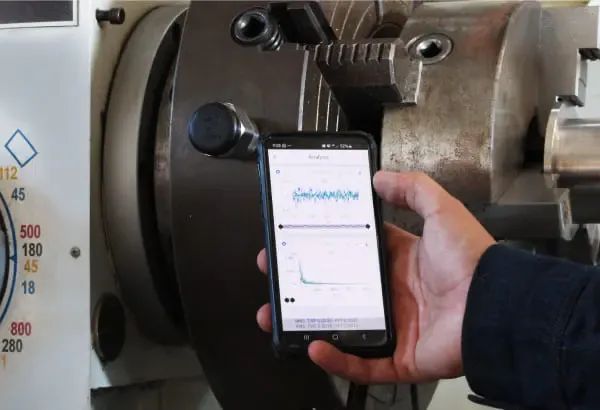
One day the plant bought him a wireless collector and a phone. The walk was the same, but now the sensor read three axes in one placement, the phone showed him the spectrum right there at the machine, and every reading went into a database instead of a notebook. For the first time, the plant had a history.
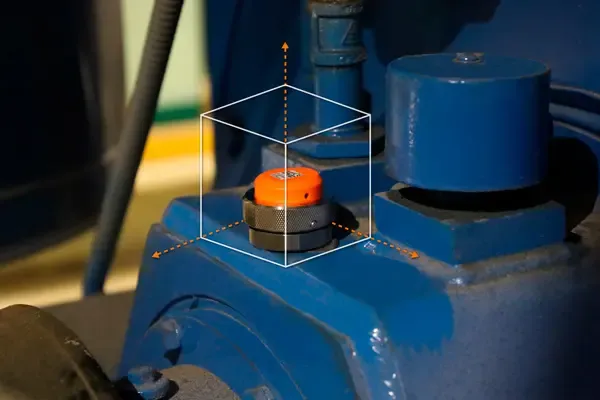
The history showed something nobody had noticed: most machines were boring. They did the same thing every month. But eleven of them were not. So the plant bought eleven small sensors, screwed one onto each of those eleven, and left them there. Those machines were now measured every minute instead of every month — in the same software, in the same database, on the same graph as before. Nobody had to learn a new program.
Then the software started to talk.
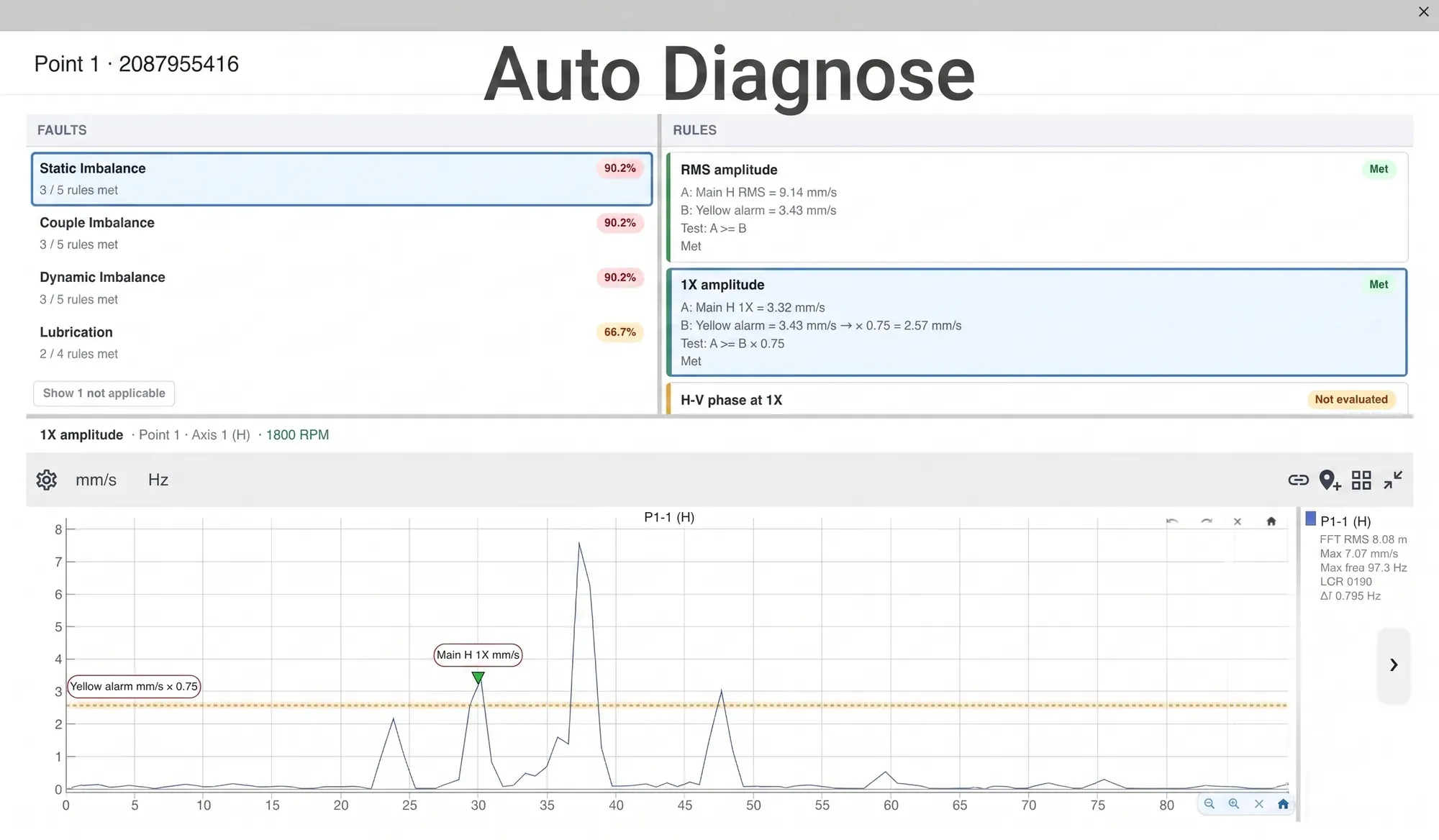
It did not say “vibration high”. It said “static unbalance, 90 percent sure — and here are the three rules I used to decide.” The technician looked at the spectrum, agreed, and for the first time wrote a work order before the machine did anything.
The next year the plant added twenty more sensors. The year after, forty. It never bought all of them at once, it never threw away a reading, and it never changed software. The technician still walks a route — a shorter one — past the machines that are still boring.
A real version of this story, with a paper machine and a customer’s name on it, is in our case study on route collection and online monitoring working together.
That journey — a monthly route first, permanent sensors where they earn their place, the software naming the fault — is the yardstick for everything that follows. Here is how the four systems measure up to it.
1. ERBESSD INSTRUMENTS® — the system you own, and the only one three different people can use
Best for: plants that intend to still be running this program in five years, and that want the sensors, the software and the history to be theirs.
We started as a vibration analyzer and balancing machine manufacturer and moved into wireless sensors afterwards, not the other way around. That order explains the whole design: the platform assumes you might want the raw waveform, that you might want to keep it on your own server, and that the person reading the dashboard is not necessarily the person who can read a spectrum.
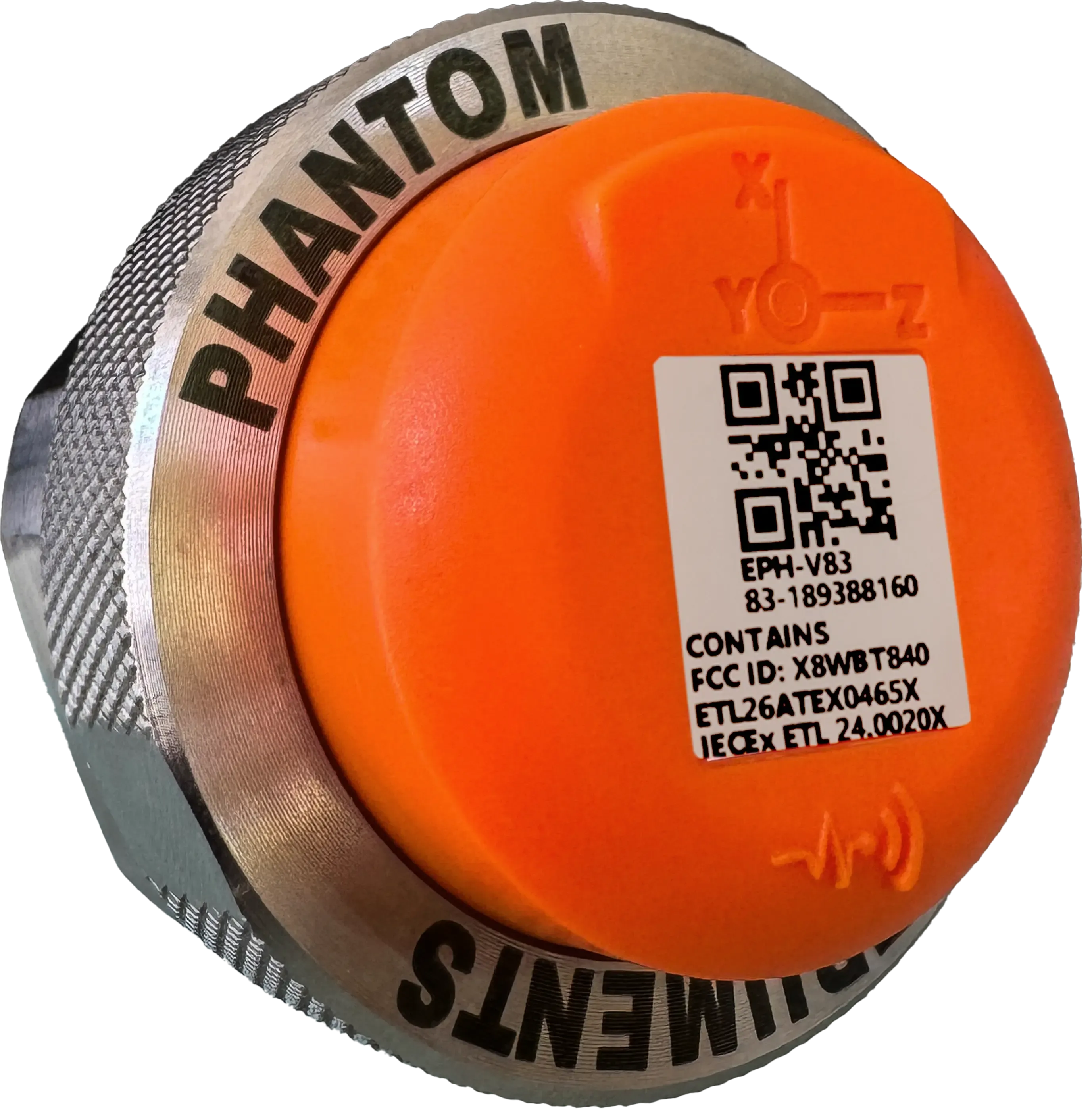
You buy the hardware. The PHANTOM® Gen 4 is the sensor most of the plant gets: a 46 mm puck, 34.5 mm tall, 187 g, on a 1/4-28 stud, IP69 and ATEX Zone 2, sampling at 32 kHz with 8 kHz of usable bandwidth. Nobody buys it one at a time: the store lists a single unit at about $580 and a 12-pack at about $460 each, and the 100-, 500- and 1,000-unit packs most plants actually order bring the unit cost down by up to 40 %, to roughly $350. Whatever the pack, it is a one-time purchase that goes on your asset register for its working life, with no monthly fee to keep it running — and when the CR2477 cell runs down after its rated 65,000 measurements, you open the sensor and drop in another one, so the working life is yours to extend. For the handful of assets a gateway cannot get near, the PHANTOM® Max adds long-range transmission, long recordings and 204,800 lines of resolution in a larger housing.
It is that small because it carries only what the point needs. The Gen 4 houses triaxial vibration and temperature, and nothing else, which is how 187 g fit in 34.5 mm of height on a stud. An all-in-one sensor that carries ultrasound, a magnetometer and a long-range radio at every bearing needs a bigger housing: Tractian’s is 40 × 71 × 40 mm, 180 g, plus a 22 or 50 g base that must be glued or screwed to the asset — a 20 mm disc with an M6 thread, per its datasheet drawing — per its own specifications. Height above the mounting plane and glue are the two things ISO 5348 warns about, because both lower the mounted resonance into the band the spec sheet claims — ask any vendor for the frequency-response curve of the sensor as mounted, with the base they ship. We explain the physics in Why the shape of a vibration sensor decides what it can measure.
Eleven sensor types, and an input for everything else. Vibration (triaxial in high and low range, biaxial, All-in-One and ATEX-certified), thermocouple modules with 2, 3 and 4 channels that read −210 to 1,800 °C with any Type-K probe — where an all-in-one sensor’s built-in temperature stops at its own housing, 120 °C in Tractian’s case — a wireless thermal camera for −70 to 380 °C, current in 3 and 4 channels, RPM, and dry contact for starts, stops and panel alarms. And for whatever is already on the machine — pressure, level, LVDT, proximity, a third-party ultrasound probe — the general-purpose modules take four channels each of 4–20 mA, 0–10 V or ±2.2 V dynamic signal, so it lands in the same database on the same timeline as the vibration. Pressure and vibration on one chart is how you separate a cavitating pump from an unbalanced one in fifteen seconds.
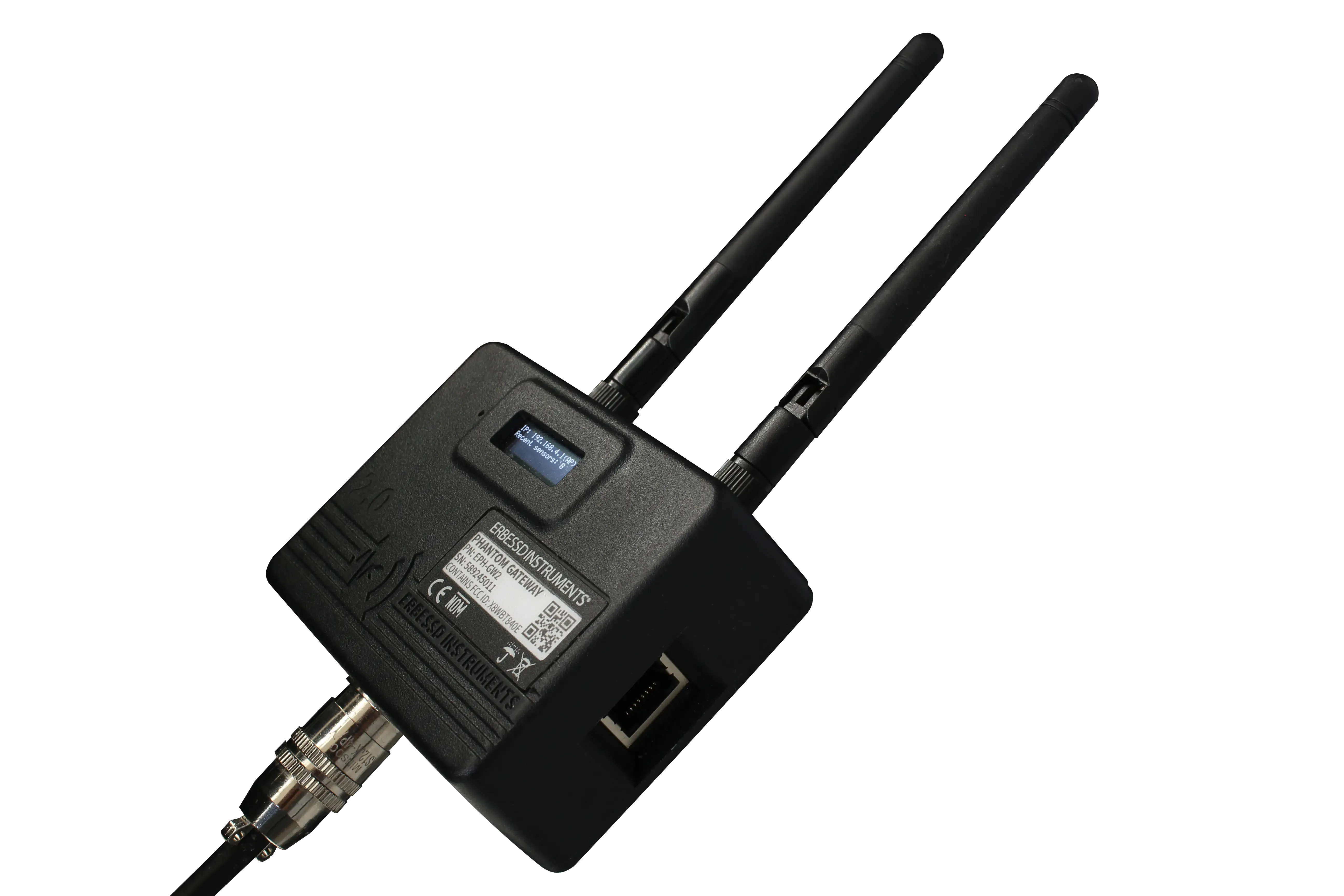
Certified for hazardous areas, with the certificates published. The ATEX version of the Gen 4 carries both schemes and both hazards: ATEX ETL 26ATEX0465X and IECEx IECEx ETL 24.0020X, gas and dust (Ex ic IIC T5 Gc · Ex ic IIIC T85 °C Dc), rated from −30 °C to +80 °C ambient. Both certificates are downloadable with their numbers, so a safety engineer can verify them before the purchase order instead of after, and the company is ISO 9001:2015 certified. Tractian states ATEX/IECEx compliance in its specification sheet; we could not find a certificate number published. Dynamox and Augury do not document hazardous-area certification at all.
The database can live in your building. On premises it runs in SQL Server or MySQL — standard, queryable, backed up by whatever tools your IT department already owns — and the data never leaves your network. Or run it in our cloud and get phone notifications. And the data leaves through four doors at once: MQTT with the full time waveform as plain JSON, a native OPC UA server, Modbus TCP/IP and a full cloud API. The payload schema is published on this website, so your integrator can quote the work before you buy anything.
You pay for the variable, not for the bundle. A pump in a quiet room does not need ultrasound or a magnetometer, and with a modular system it does not pay for them: the vibration point costs the Gen 4, a temperature point about $260, and the ultrasound probe goes only on the three machines that earn it. An all-in-one sensor charges every point, every month, for the variables three machines in the plant actually use.
You do not have to buy it all at once. The route is walked with an EI WiSER® 3X or a GX-400 — a triaxial sensor and a phone — and the permanent side is PHANTOM®. It is the same software, the same database, the same machine-learning alarms and the same CMMS integrations on both sides, so a plant can start with one route collector for the whole site, learn which machines deserve a permanent sensor, and add PHANTOM® units at the pace its budget allows. A machine gets promoted from route to permanent monitoring without restarting its history and without anyone learning a second program. Of the other three, only Dynamox sells a route side, and its platform stops at vibration and temperature; with Tractian and Augury the first sensor is the first hundred.
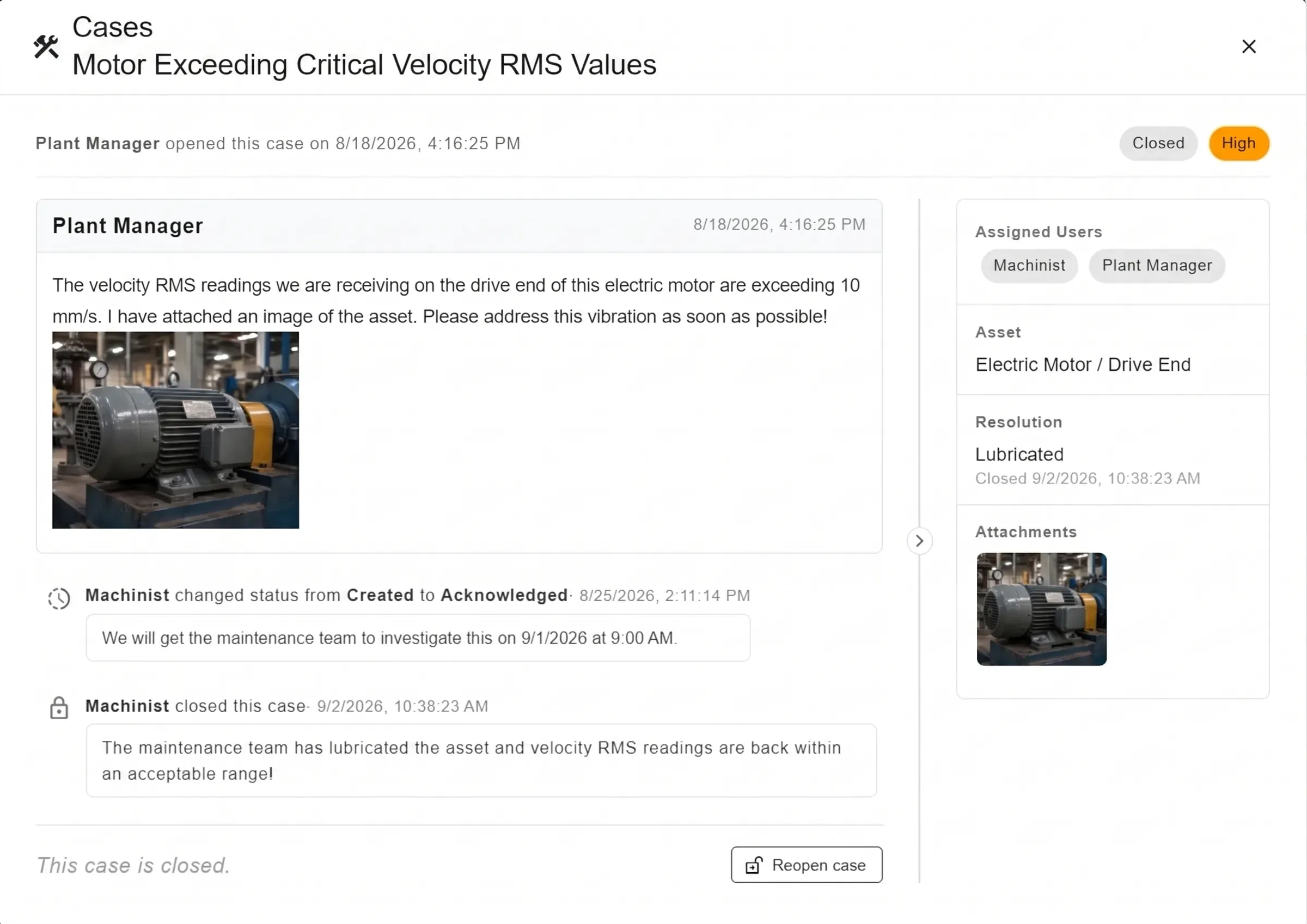
Your CMMS gets the case, not just an alarm. PHANTOM® creates and shares cases in MaintainX, SAP and IBM Maximo, with the comment thread, the attachments and the timeline attached. With MaintainX it is a managed package: MaintainX sells the sensors, installs them and turns the readings into alerts and work orders inside its own platform, as its help center documents. Anything else that reads Modbus, MQTT or OPC UA can take the alarm too.
And for the critical machine, wired. The DEFIANT™ samples 8 or 16 channels simultaneously at 96 kHz, 24 hours a day, from 0.5 Hz to 25 kHz — three times the top sampling rate of any wireless sensor in this guide, and phase between channels, which a scheduled wireless sensor cannot give you — and it feeds the same software and the same database as the PHANTOM® sensors it also receives. The other three vendors sell one kind of device; the plant rarely needs only one kind.
It does the correction, not just the diagnosis. The same software performs dynamic balancing, ODS and motion magnification with Dragon Vision®. Every other system on this list stops at telling you the machine is unbalanced.
The AI gives the verdict; the analyst signs it. The diagnoses in EI-Analytic™, Digivibe MX® and WiSER VIBE® come from a built-in assistant, Erby, that does not guess from a lone spectrum. Before it answers, the software — not the model — assembles the whole picture of the machine: its datasheet with configuration, bearings, speed range and alarm limits; the statistics already computed; the trends with their change points and operating states; the octave-band trends that show where the energy is moving; the current waveform and spectrum with peaks labelled in orders, bearing frequencies and envelope; the health of the sensor itself; the photo or 3D model; and the notes analysts have written about that machine. It can run its own checks on the waveform — harmonics, sidebands, impacts, phase between axes — before asking the analyst for a new measurement.
What separates it from a generic chat is that context. The assistant knows the machine, knows the plant and knows the analyst: it learns how each one wants to be answered, what they weigh most and how their installation is built, and remembers it from one conversation to the next. What comes back is a verdict the analyst can check: the diagnosis with its confidence, severity and action window; the evidence with dates, values and units; what contradicts it, what would confirm it, and the configuration changes that would change the reading. The analyst reviews and signs. The AI supplies the verdict, not the signature.
Three layers, and the AI is not the one diagnosing. A rule engine names the fault from thirteen fault types, each one a set of conditions whose arithmetic you can open and edit — it works from the very first measurement, with no history and no training. The machine learning is trained on your data: it clusters each point’s measurements into the operating modes that machine actually has, and learns alarm limits from a healthy period you choose. Erby reads all of it and explains it, showing you the context package — and what the answer costs — before anything is sent. How that works in detail.
The memory that matters is yours, not the model’s. Every vendor’s model arrives knowing the published literature. Ours also keeps how you like your alarms set, which machines you already decided to ignore and the reason you gave, that the compressor in area 4 always looks alarming at startup and never is, and the way you word a case before handing it to production. It is not learning vibration from you — it already knows vibration. It is learning you, and that is the one thing a competitor cannot copy. And it never acts alone: it can prepare a case, a note, a route or a report, but the window opens filled in and a person presses save.
And it does the work, not only the verdict. Hand it a photo of a machine and ask for an ODS session: it asks the one question that decides the answer — on a belt-driven fan, how the power reaches the shaft — and returns the project with its four triaxial points already placed, ready to collect and animate. The same assistant registers an asset from a photo of its nameplate, builds a dashboard from a description, and opens the screen you asked about instead of explaining where to find it. The whole sequence is on the Digivibe MX® page.
Who in the plant actually uses it
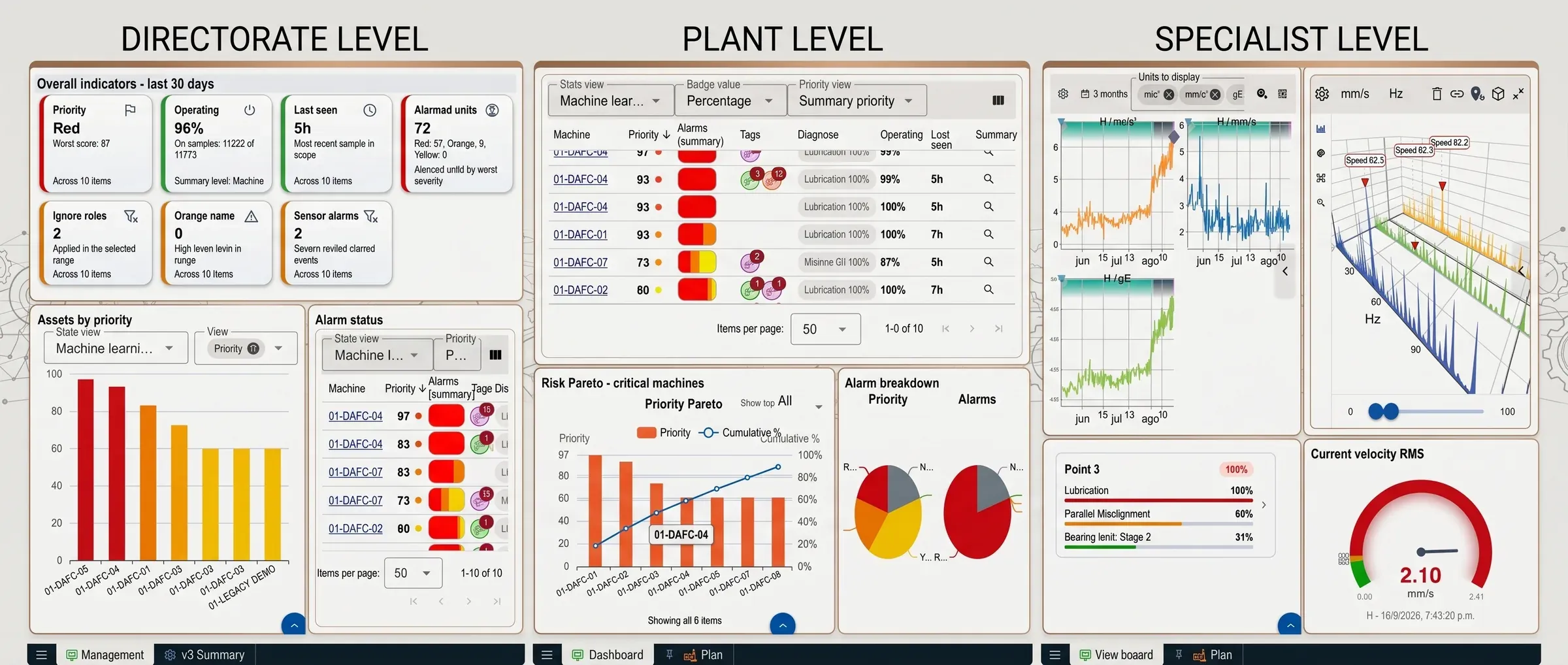
The plant manager sees a priority score on every asset: risk (60 %, the share of readings in red, orange and yellow) plus urgency (40 %, estimated time to failure and trend slope). It propagates up the plant tree, so an area inherits the urgency of its worst machine and a management view is accurate without opening a single spectrum.
The maintenance supervisor gets a named fault from the rule engine: static, couple and dynamic unbalance; parallel and angular misalignment; bent shaft; bearing stages 2, 3 and 4; cocked bearing; looseness; cavitation; lubrication failure. Not “vibration high” — a fault with a confidence figure, so the work order writes itself.
The analyst can open and edit the conditions every diagnosis rests on — 1X, 2X and 3X amplitude, horizontal-to-vertical phase, envelope content, high-frequency energy — plus the raw waveform, the spectrum, the waterfall. It is an argument you can win, not a verdict.
Where it is not the right fit
- We do not sell a CMMS. We put the case into the one you already run — MaintainX, SAP, IBM Maximo, or anything that reads Modbus, MQTT or OPC UA — instead of replacing it. If you have no CMMS at all, Tractian bundles one.
- We do not sell an ultrasound sensor of our own. A third-party probe comes in through the 4–20 mA or 0–10 V input, and you buy it only for the machines that need it; Tractian builds it into every sensor, and charges every bearing for it.
- A human analyst is not included by default. The AI assistant is; the person who signs its verdict is not. Augury puts its analysts in the subscription. Ours is a network of certified providers in more than forty countries that you engage separately — or you can do it yourself. It should be your choice.
- Notification behavior depends on your deployment architecture. With on-premises deployment, data and alerts remain within the local server environment. Cloud deployment enables push notifications to mobile devices while maintaining remote access to system alerts.
Pricing: one-time hardware purchase. Gen 4 from about $350 per sensor in volume packs (about $460 in a 12-pack, $580 single). Gateways from $680; software included; cloud storage free up to a limit, then about $1,200 a year for 100 sensors; no per-sensor monthly fee.
3. Dynamox — the closest to us on ownership, the furthest on coverage
Best for: programs that want to grow one asset at a time, starting on a walked route and promoting machines to permanent monitoring as they earn it.
Dynamox understood early that not every machine deserves a permanent sensor. Their DynaLoggers are Bluetooth data loggers with triaxial spectral capability, read either by a phone on a route or automatically by a DynaGateway.
What it does well
- You buy the hardware, with a one-year warranty from the invoice date.
- Genuinely hybrid architecture: the same logger serves a route or a gateway.
- A public API for moving data in and out.
- CMMS and EAM integration.
Where it falls short
- The battery cannot be replaced. In Dynamox’s own words, “the case of the device is inviolable, so it is not possible to change the battery”. You own the logger, but only for as long as its first battery lasts; after that, what you own is a sealed housing.
- Vibration and temperature only. No current, no RPM, no thermal imaging, and no third-party sensor input.
- Cloud-only platform. No on-premises database is documented.
- API access is sold in usage plans that scale with data volume and request count — your own data carries a per-request price.
- No balancing, ODS or motion magnification. The software diagnoses; the correction happens elsewhere.
The gap that matters: Dynamox gets the ownership question right, then limits it to one battery, and stops at two variables in somebody else’s cloud. Erbessd matches the hybrid route-plus-continuous model, adds nine more sensor types, and puts the database in your building with the raw waveform available over MQTT at no per-request cost.
FAQs about vibration monitoring systems
What is the best vibration monitoring system in 2026?
For a plant building a program meant to last, ERBESSD INSTRUMENTS® — because the sensors are a one-time purchase, the database can run on your own server in SQL Server or MySQL, and one platform covers both walked routes and continuous monitoring across eleven sensor types. Tractian is the better fit if you want one vendor for monitoring and maintenance management and are content to rent. Augury is the better fit if you need analysts more than instruments. Dynamox suits a program that wants to grow one asset at a time and only needs vibration and temperature.
Is Erbessd cheaper than Tractian or Augury?
Over one year on a handful of machines, a subscription is usually cheaper because there is no capital outlay. Over five years the comparison inverts sharply. At the roughly $35 per sensor per month that third parties report for Tractian, 100 sensors cost $210,000 across five years and none of the hardware is yours at the end. The equivalent 100 Erbessd Gen 4 sensors are a one-time purchase of roughly $350 to $460 each in a volume pack, and they remain on your asset register.
Can I rent vibration sensors instead of buying them?
PHANTOM® sensors are sold outright, and some distributors in our network also rent them — bundled with their own analysis service, on their own terms, so the price varies by country and by provider. That makes renting a choice rather than the only model: a plant that cannot raise capital this quarter can start on a rental, with a certified analyst it can name and meet, and move to ownership later — same sensors, same software, same database, without restarting the history. With Tractian and Augury renting is the model: the hardware is bundled into the subscription and never becomes yours.
What happens to my vibration data if I stop paying?
With an on-premises Erbessd deployment, nothing at all: the database is in your building, in SQL Server or MySQL, there is no yearly fee, and you keep querying it with any standard tool. In the Erbessd cloud the only recurring cost is storage beyond the free limit, about $1,200 a year for a hundred sensors; if you stop, you back up your data and the sensors are still yours. Tractian, Dynamox and Augury all host the platform in their own cloud, so this is the single most important clause to settle before signing — ask specifically what you get back, in what format, and for how long after cancellation.
Do I need a vibration analyst to use a vibration monitoring system?
No. With Erbessd, every asset gets a priority score built from risk and urgency, the rule engine names the specific fault — unbalance, misalignment, bearing stage, cavitation, lubrication failure — and the built-in AI assistant, Erby, hands over a verdict with its confidence, severity, action window and evidence, so a maintenance supervisor can act without opening a spectrum. When you want deeper analysis, you can call a certified provider from a network in more than forty countries or train your own team. Augury bundles its analysts’ diagnostics into the subscription fee; Tractian relies on its AI auto-diagnosis.
Do I have to buy all the sensors at once?
Not with Erbessd. A plant can start with a single route collector — an EI WiSER® 3X or a GX-400 with a phone — and cover every machine on a walked route, then add PHANTOM® sensors one machine at a time as the budget allows. Route and continuous data live in the same software, the same database and the same machine-learning alarms, with the same CMMS integrations, so nothing is re-learned or re-entered when a machine is promoted to permanent monitoring. Tractian and Augury sell continuous monitoring only, so the program starts at the size of the first contract.
Can you replace the battery in a wireless vibration sensor?
It depends on the sensor, and it decides how long “owning” it means anything. A PHANTOM® Gen 4 runs on a standard CR2477 lithium cell rated for 65,000 measurements, and you replace it yourself. Dynamox’s DynaLoggers are sealed: their own FAQ says the case is inviolable and the battery cannot be changed, so the sensor you bought lasts exactly one battery. Tractian’s sensor is sealed too, but since it is rented, Tractian swaps the whole unit. Augury sells replacement battery kits for the Halo, which is also rented.
Which vibration monitoring system integrates with my CMMS?
All four will get an alarm into a CMMS, by different means. Erbessd creates and shares cases directly in MaintainX, SAP and IBM Maximo — with MaintainX, the whole package is sold, installed and supported by MaintainX itself — and exposes everything over Modbus TCP/IP, MQTT, OPC UA and a full API, so any other CMMS, historian, SCADA or BI tool that reads one of those four protocols can consume it. Tractian ships prebuilt connectors for SAP, IBM Maximo and Oracle NetSuite plus its own CMMS. Dynamox and Augury integrate through their APIs.
Can I connect vibration sensors I already own to a wireless system?
With Erbessd, yes, if they output 4–20 mA, 0–10 V, a dry contact or a ±2.2 V dynamic signal. The PHANTOM® general-purpose family adopts existing pressure transducers, LVDTs, level sensors and proximity probes and puts them on the same wireless network and in the same database as the vibration data. We could not find an equivalent third-party sensor input documented by Tractian, Dynamox or Augury.
Which vibration monitoring systems work on variable-speed machines?
Any system that measures RPM alongside vibration. Without a speed reference, order-based analysis on a variable-frequency drive is guesswork, because half the spectrum shifts every time the drive changes setpoint. Erbessd sells a wireless RPM sensor that reads the shaft directly and feeds the same database as the vibration. Tractian estimates RPM inside the vibration sensor with a magnetometer, which works on most motors but is an estimate rather than a measurement; we could not find a speed input in the published catalogues of Dynamox or Augury.
Further reading
- Is Your Vibration Diagnostic System a Black Box or a White Box?
- Why One Signal Isn’t Enough — The Case for Multi-Modal Monitoring