What the WiSER ecosystem consists of
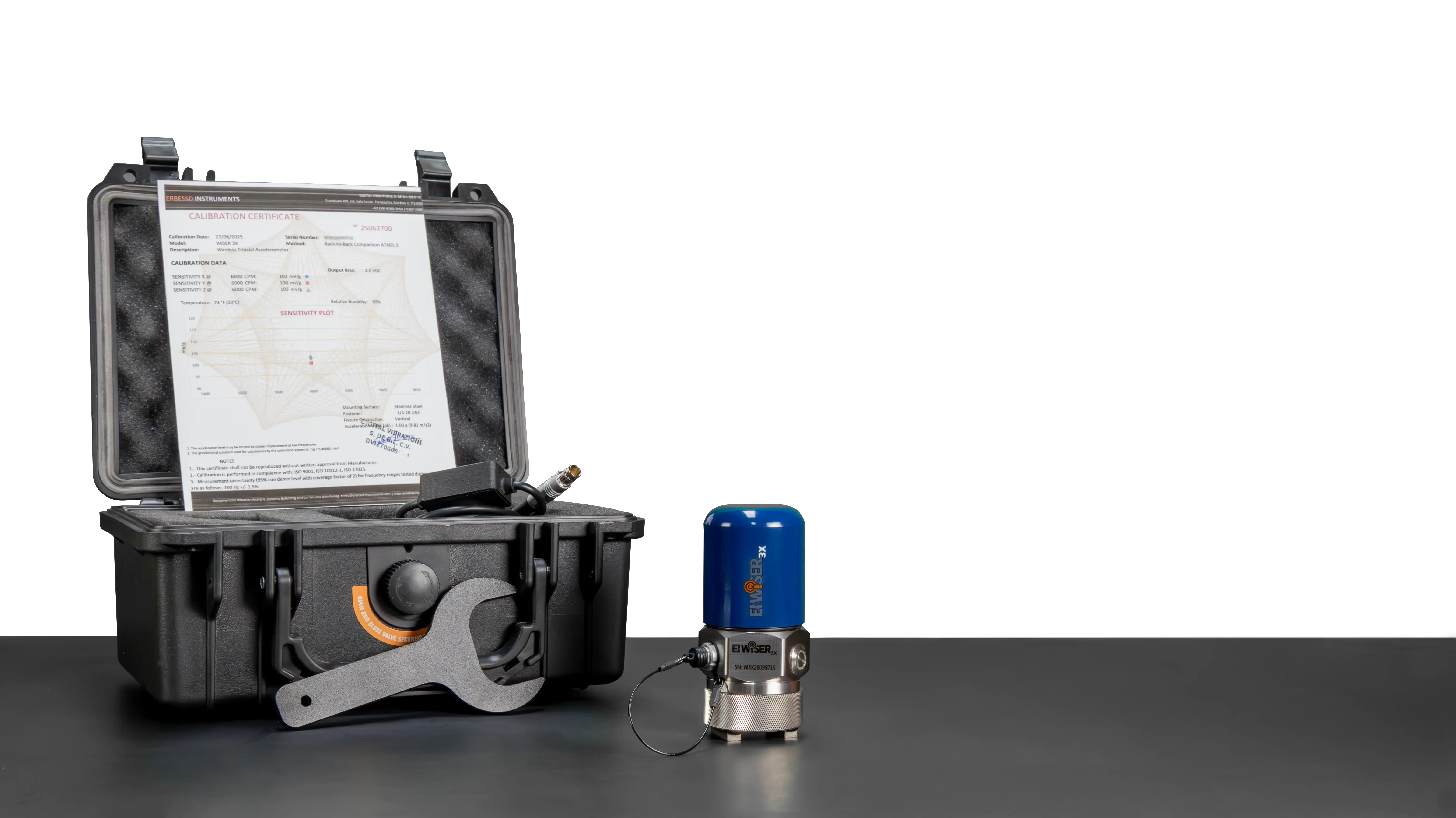
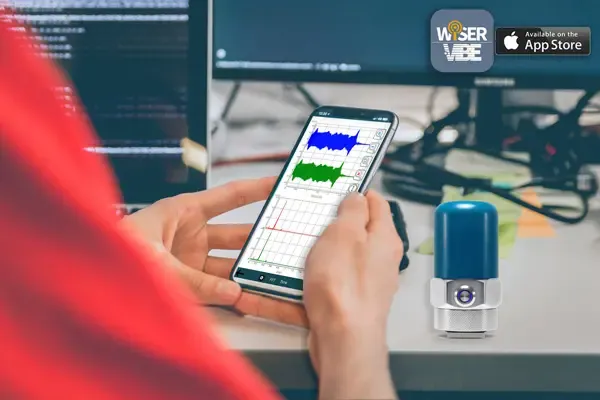
EI WiSER® 3X is a wireless triaxial accelerometer that connects over Wi-Fi to a phone or tablet running WiSER VIBE®. Between them they run the whole route: configure it, collect three axes in one placement, diagnose the machine on site with spectra, orbits and bearing fault frequencies, and send the reading to the cloud before the technician leaves the point.
This page lists what the ecosystem does, walks through a route from setup to report, and covers the capabilities an older handheld collector does not have.
Four parts cover collection, analysis, desktop work and remote access. A route-based program uses the first two; the others are there when the program grows.
EI WiSER® 3X — the sensor
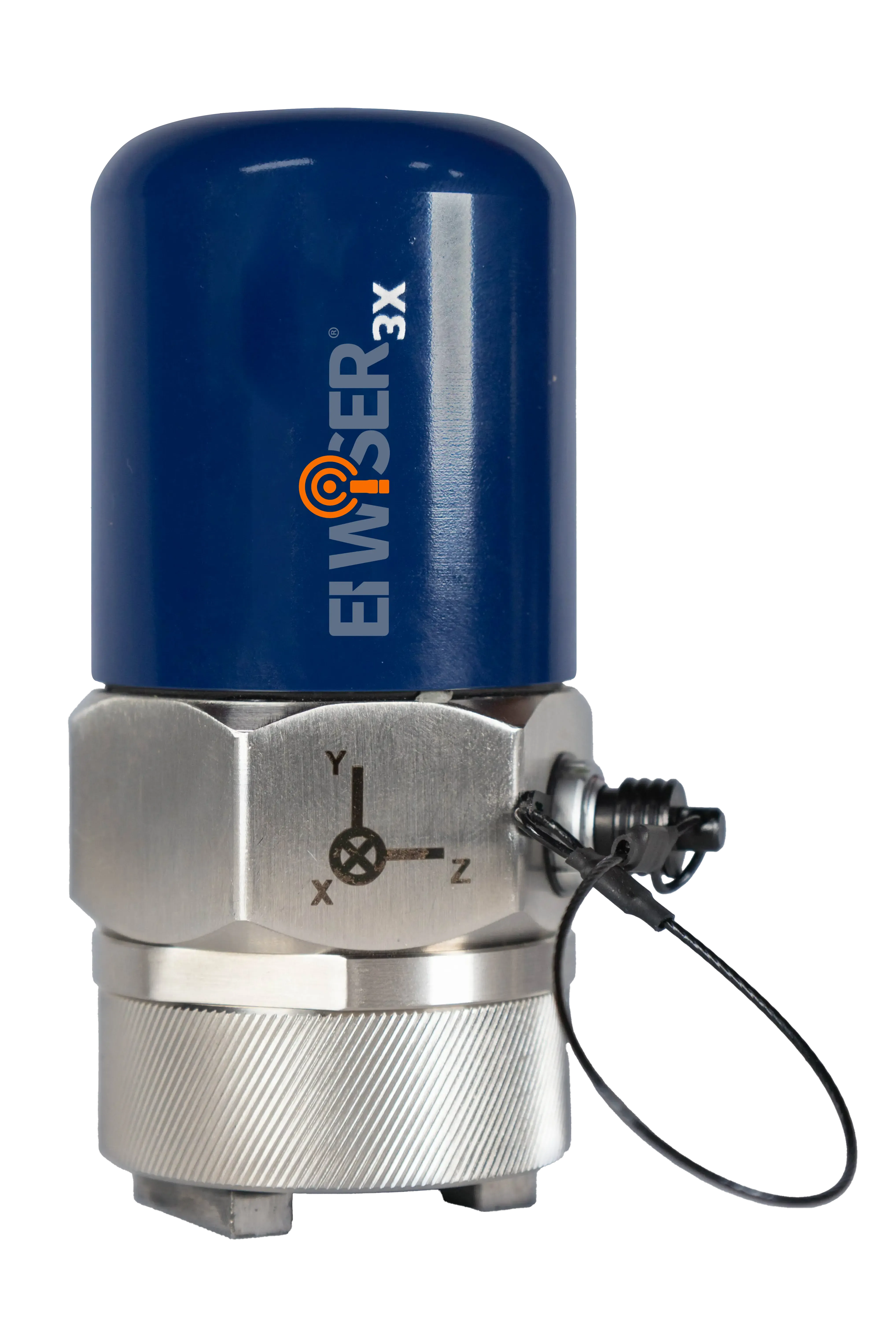
Wireless triaxial accelerometer. Three axes plus one additional channel, 10 kHz bandwidth, Wi-Fi direct to the phone with no receiver.
WiSER VIBE® — the analyzer
The app that configures routes, collects data and performs the analysis. iOS and Android.
Digivibe MX® — the desktop
Deeper analysis on a laptop, plus a four-channel wired interface for multi-channel and ODS work.
EI-Analytic™ — the cloud
Storage, trending and remote access, so an analyst can review a reading without visiting the site.
A route from setup to report
The steps below follow one shift in order, from configuring the route to putting the result in front of whoever schedules the repair.
-
Set up the route
Routes are built inside WiSER VIBE® and stored on the device, so the phone carries the route the way a dedicated collector carries its database. The app collects on route and off route: an unplanned measurement on a machine that is not in the route does not need a separate workflow.
-
Collect the point
The sensor is placed once per point. It records three axes plus one additional channel and returns acceleration, velocity, displacement and acceleration envelope from that single capture. The button on the sensor starts and stops the recording, so it stays where it was placed.
-
Read the result at the machine
WiSER VIBE® returns machine condition status on the spot, while the technician is still at the point. A reading that looks wrong can be repeated immediately, with the machine in the same operating condition — the only time a comparable repeat measurement is possible.
-
Diagnose at the point
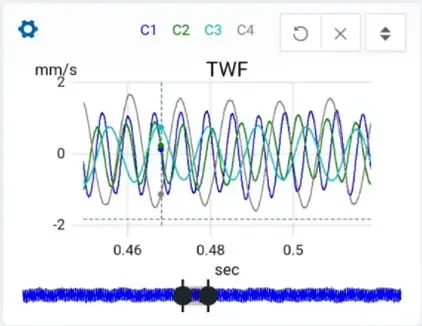
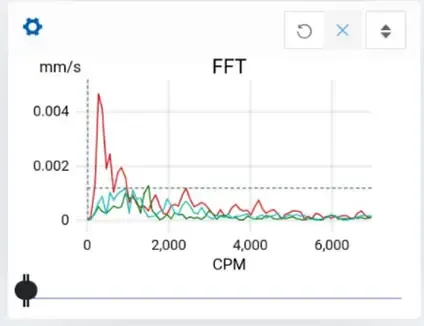
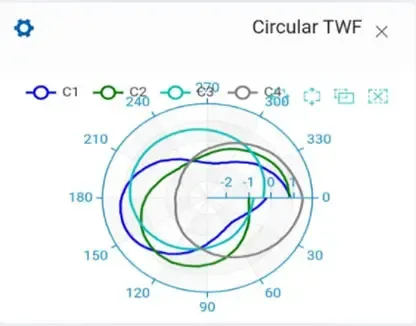
The full analysis toolset runs on the phone. Time waveform, FFT, circular time waveform and orbit plots are available on the captured signal, and the bearing database resolves fault frequencies for the specific bearing on that machine — no waiting to get back to a desk.
-
Send it to whoever decides
Readings upload to EI-Analytic™ from the point of measurement, so a second opinion does not require a return visit. Data also transfers to Digivibe MX® through QR Connect, and single measurements can be saved or sent over WhatsApp. An EI-Analytic™ account with 1 GB of storage is free.
-
Stream when a point needs it
Measurements run at more than 1,000,000 lines of resolution, and real-time streaming has a maximum delay of 0.2 seconds for recordings that need to run continuously rather than as a single capture.
Analysis tools in WiSER VIBE®
These run in the app, on the phone, on data collected on or off route.
Time waveform
Fast Fourier transform
Circular time waveform
Orbit plot
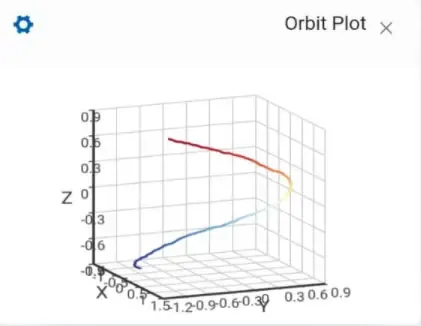
Alongside those four plots, the app performs Bode analysis in real time or from a stored signal, synchronous averages, and envelope alarms viewed directly on the phone.
The faults this toolset is used to identify include mechanical looseness, eccentricity, resonance, natural frequencies, electrical noise, gear faults, belt problems and damaged shafts.
Bearing fault frequencies for more than 25,000 bearings
WiSER VIBE® carries a database of over 25,000 bearings and resolves the specific fault frequencies for each one. Those frequencies follow from the geometry of the rolling elements, so identifying them against the correct bearing is what separates a bearing defect from general noise in the spectrum.
The database is on the phone, which means the bearing can be identified at the machine rather than noted down and looked up afterwards.
25,000+
bearings in the fault frequency database
1M+
lines of resolution per measurement
10 kHz
bandwidth on all three axes
Balancing in the field, from the same app
WiSER VIBE® performs single-plane balancing using influence coefficients, so a balance job does not require carrying a second instrument to the machine. The sensor that collected the route is the sensor that runs the balance.
Two-plane and more demanding balancing work is handled by Digivibe MX® on the desktop, using data from the same sensor.
Field evidence: Salvtech at a UK power station
Salvtech is a UK engineering company serving the paper, recycling and waste industries. Its engineers are experienced vibration analysts, and the company already owned vibration analyzers when it adopted EI WiSER® 3X for fan inspections at a power station.
It dramatically increased the number of readings we took during this visit as part of a day of fan inspections. The engineer was able to collect and check the results on his iPhone and I simultaneously interrogated the data on the laptop via the online software in the van.
— Martin Christmas, Managing Director, Salvtech
Salvtech went on to purchase EI WiSER® 3X and Digivibe MX® M20.
Three sensors
Sensors the app connects to
WiSER VIBE® is not tied to a single sensor. The same app collects from three, so a program can mix portable route collection with permanently installed monitoring without changing software.
Wi-Fi · triaxial
EI WiSER® 3X
Wi-Fi, no receiver. Three axes plus one channel, 10 kHz, over 1,000,000 resolution lines.
Bluetooth · triaxial
EI WiSER® 3X Mini
The most portable option, for fast collection where size matters most.
Bluetooth · installed
PHANTOM® sensors
Permanently installed sensors for machines that need continuous monitoring rather than periodic routes.
EI WiSER® 3X specifications
| Measurement axes | 3 simultaneous, plus 1 additional channel |
|---|---|
| Sensor | Ultra-low-noise analog MEMS accelerometer |
| Sensitivity (X, Y, Z) | 100 mV/g |
| Frequency range (±3 dB) | 0.5 Hz to 10 kHz |
| Dynamic range | 20 g |
| Sample rate | 48,000 Hz, 24-bit ADC |
| Resolution | Over 1,000,000 lines |
| Outputs per capture | Acceleration, velocity, displacement, acceleration envelope |
| Wireless connection | Wi-Fi 802.11, direct to phone or tablet — no receiver required |
| Operational distance | Up to 20 m |
| Real-time streaming | Maximum delay 0.2 s |
| Battery | 2 × rechargeable Li-ion CR123, 6 h of continuous use |
| Housing | Stainless steel, water and dust resistant (IP67) |
| Operating temperature | −20 to +60 °C (−4 to 140 °F) |
| Weight | 425 g with magnetic base, 250 g without |
| Mobile app | WiSER VIBE® for iOS and Android |
| Desktop software | Digivibe MX® via QR Connect |
| Cloud | EI-Analytic™, 1 GB free |
| Third-party compatibility | WiSER Universal Receiver (WUR3x), 4-channel BNC output to other data collectors |
Full figures are in the EI WiSER® 3X datasheet.