This case study documents the detection of a fluted bearing on a DC motor operating under inconsistent speed conditions. Due to fluctuating RPMs caused by process dynamics and load variability….. With RPM fluctuating between 200–800 RPM, time-based vibration data produced false alarms and unreliable severity assessments
Solution
ERBESSD INSTRUMENTS® PHANTOM® wireless sensors are configured to collect data based on specific machine conditions, not just time intervals. By integrating the PHANTOM® RPM sensor – This approach ensures that vibration data is captured at the right time and under consistent machine conditions, making trending far more reliable and repeatable
EPH-S40 | Wireless Speed Sensor
This Wireless Speed Sensor uses a Hall effect switch and a neodymium magnet, all included in the kit. As a result, you can easily analyze the revolutions per minute of any rotor, turbine or vent with incredible precision
Wireless RPM Sensor-triggered PHANTOM® Sensors – synchronized, repeatable, reliable
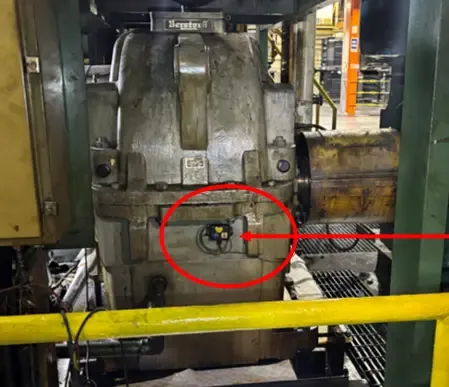
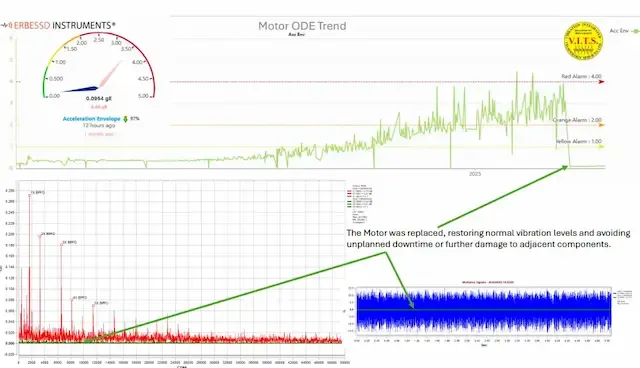
Early Email Alerts from EI-Analytic™ Months before failure,—giving ample time to plan a smooth, stress-free motor change-out.
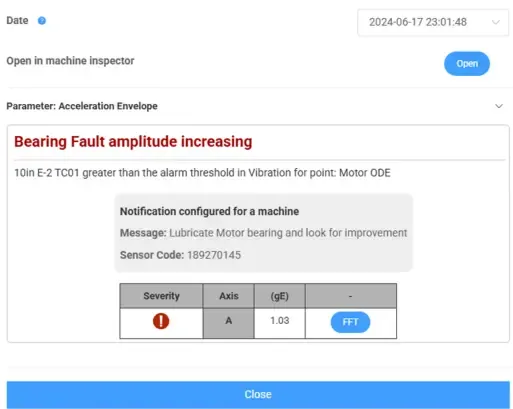

Conclusion
This case study highlights the importance of advanced vibration analysis methods in fluctuating speed machinery like DC motors.
The use of ERBESSD INSTRUMENTS® PHANTOM® wireless sensors combined with RPM-triggered data acquisition enabled reliable early detection of an issue in a critical bearing.
This case reinforces the need for synchronized diagnostic tools in challenging operating environments